
What Wood Species Are Best for Exterior Siding in Mountain Climates?
If you’re planning an exterior siding project in the mountains, you already know the stakes are higher than a typical suburban build. A siding choice that performs beautifully in Denver, Dallas, or Sacramento can fail fast at 9,000 feet, where intense sun, snow load, and freeze-thaw cycling all work against the wall at once.
The honest answer is that no single species is “best” for every mountain property. The right wood depends on your elevation, your sun exposure, your local wildfire code, and how much maintenance you’re willing to take on. What we can do is walk through how mountain conditions actually stress wood siding, then compare the species and products that consistently hold up, so you can decide based on performance rather than a showroom photo.
VANTIA Hardwoods is based in Frisco, Colorado, in Summit County, at roughly 9,100 feet of elevation. We spec and mill exterior wood for homes that sit directly in the conditions this guide describes, so none of this is theoretical.
Quick Answer
For most mountain homes, the strongest-performing wood siding options are:
- Thermally modified wood (Thermowood), for low moisture movement and decay resistance achieved without chemical treatment
- Reclaimed barnwood, for old-growth density and a weathering process that’s already been tested by decades of real outdoor exposure
- Western Red Cedar heartwood, for a natural balance of decay resistance, light weight, and workability
- Douglas fir, as a more budget-friendly option when it’s detailed and finished proactively
- Redwood heartwood, where it’s available, and budget allows, though sourcing it from outside the Rockies adds cost and lead time
If your property sits in a Wildland-Urban Interface (WUI) zone, your local wildfire code may narrow this list before species selection even comes into play. We break that down later in this guide.
Why Mountain Climates Are Different for Exterior Wood
Mountain conditions stress wood in ways that coastal and low-elevation climates simply don’t. Five factors matter most.
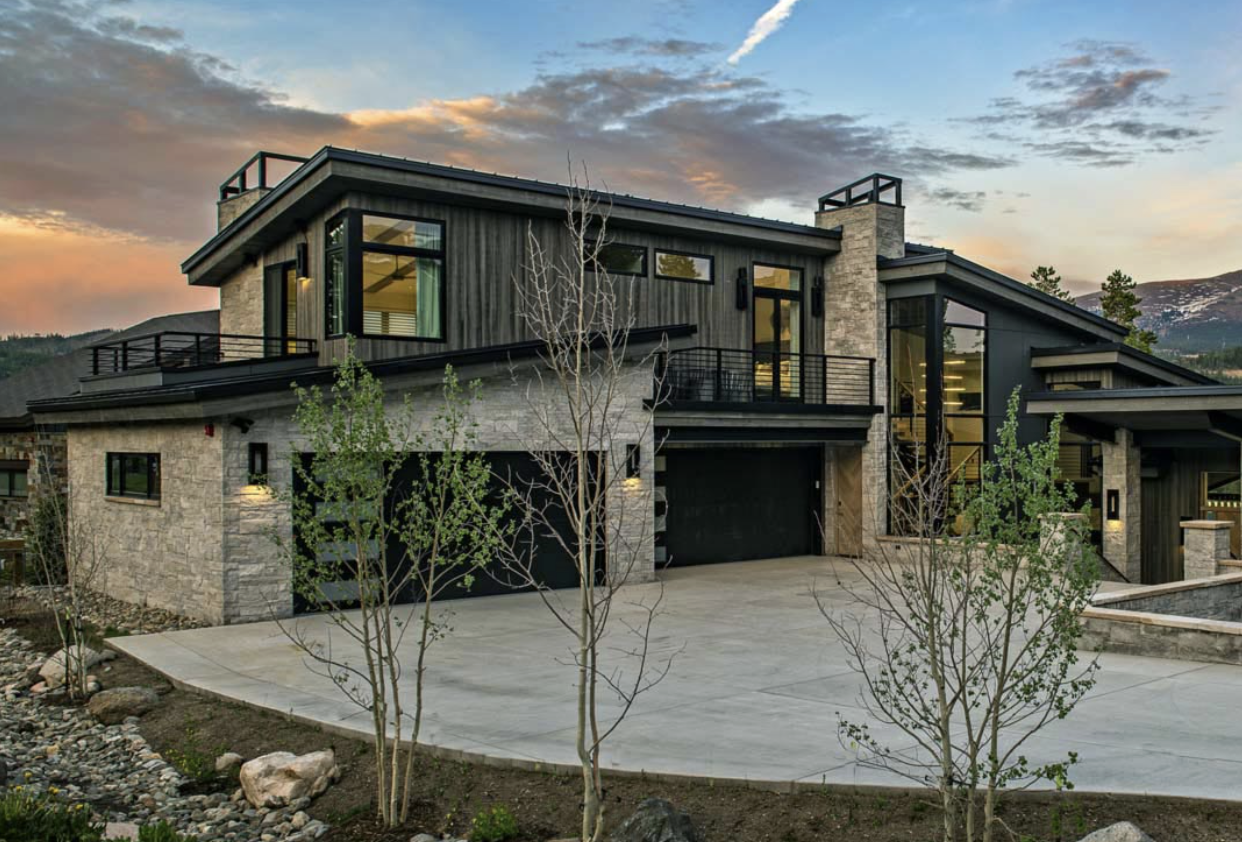
Freeze-Thaw Cycling
Moisture that gets into wood’s cell structure expands when it freezes and contracts when it thaws. In a mountain town, that cycle can repeat dozens of times in a single winter, especially during shoulder-season stretches when daytime temperatures climb above freezing and nighttime temperatures drop well below it. Repeated freeze-thaw cycling opens small checks and cracks over time, particularly at end grain, fastener holes, and any spot where the finish has worn thin. Species and products with low moisture uptake and minimal swelling hold up better under this kind of cycling than species that readily absorb and release moisture.
High-Altitude UV Exposure
The sun is measurably stronger at elevation. UV radiation increases by roughly 10 to 12 percent for every 1,000 meters (about 3,280 feet) of elevation gain, and snow cover reflects additional UV back up into siding and trim from below. That combination accelerates the natural graying and surface breakdown of exterior wood finishes, which means coatings and oils on mountain exteriors typically need more frequent renewal than the same products at sea level.
Wide Diurnal Temperature Swings and Low Humidity
Mountain climates often see 30- to 40-degree swings between day and night, paired with low ambient humidity for much of the year. Wood is hygroscopic, meaning it gains and loses moisture in response to its environment, so it expands and contracts with these swings. Species and products with better dimensional stability keep seams tighter and finishes intact longer under this kind of daily stress.
Snow Load, Splash-Back, and Ground Contact Moisture
Snowpack sitting against the base of a wall, ice damming at rooflines, and splash-back during spring melt all concentrate moisture at specific points on a building, often for weeks at a stretch. Detailing (clearance above grade, flashing, drainage planes) matters as much as species selection here, but siding with strong inherent decay resistance gives you a wider safety margin in the spots where detailing alone can’t fully eliminate exposure.
Wildfire Code in the Wildland-Urban Interface
Many mountain properties, including much of Colorado’s high country, sit inside a Wildland-Urban Interface (WUI) zone. Colorado’s statewide Wildfire Resiliency Code (CWRC) is now in force, and under its Class 2 structure hardening requirements, exterior wall coverings must be noncombustible, ignition-resistant, or fire-retardant-treated wood, with limited exceptions (Colorado Division of Fire Prevention and Control). This doesn’t rule out wood siding, but it does mean species selection has to be paired with the right product testing and documentation for your fire intensity zone. We cover this in more detail below.
Species and Product Deep Dive
Thermally Modified Wood (Thermowood)

Thermowood is a Finnish innovation that alters wood at the cellular level using only heat and steam, with no chemical additives. The process brings core temperature up toward 212°C over as long as 110 hours, driving the wood’s final moisture content down to roughly 4 to 7 percent. The result is a much lower equilibrium moisture content than untreated lumber holds, which means less swelling, less shrinking, and fewer of the small movement-related failures that freeze-thaw cycling causes over time.
Independent research on thermal modification supports this. Testing on thermally modified wood exposed to 150 accelerated freeze-thaw cycles has shown minimal structural damage compared to untreated controls, and a peer-reviewed study on thermally modified red oak found it held up better under repeated freeze-thaw cycling than untreated red oak of the same species.
VANTIA’s Thermowood siding is milled from pine and spruce sourced from certified, renewable Nordic forests. Left unfinished, it develops a natural silver-gray patina over time, a look many mountain homeowners want anyway, and it needs no chemical preservatives or routine surface treatment to hold up structurally. A UV-rated oil or stain will slow the graying process if you’d rather keep the original tone longer.
Reclaimed Barnwood
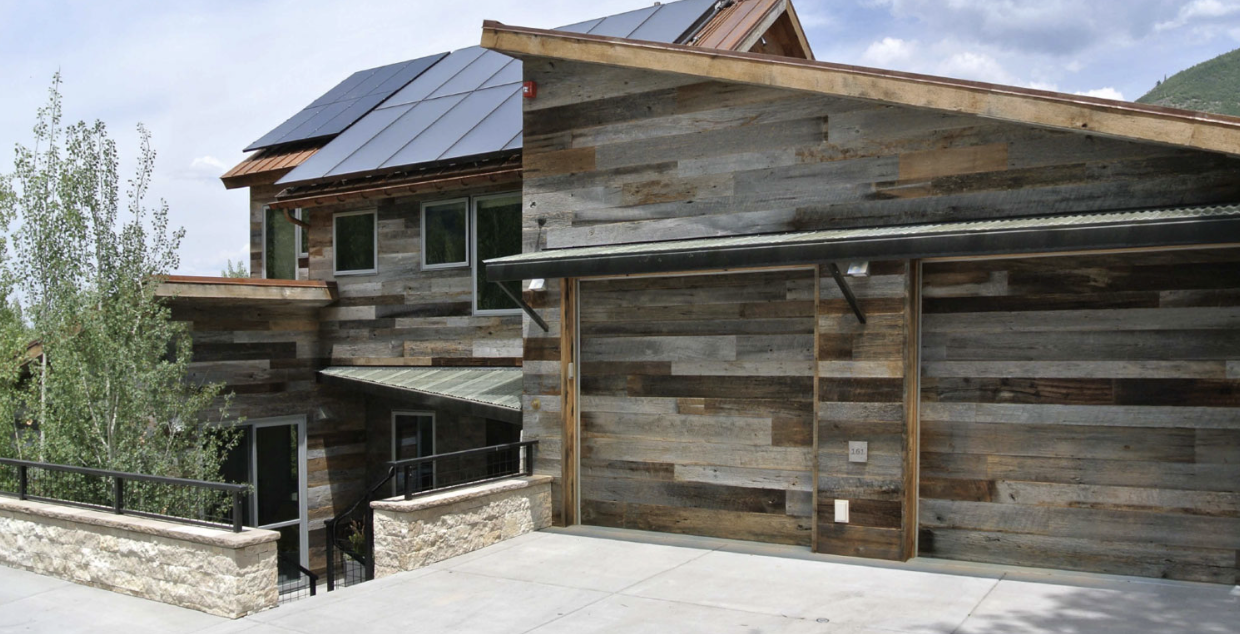
Reclaimed barnwood starts with an advantage that new lumber can’t match: it’s already proven itself outdoors. Boards salvaged from century-old barns, warehouses, and other structures were typically milled from old-growth timber that’s denser and slower-grown than most lumber cut today, and the material has already weathered decades of real freeze-thaw cycles, UV exposure, and moisture swings before it ever reaches a job site.
That density and pre-weathering translate into strong dimensional stability once the wood is re-installed. It’s also, practically speaking, one of the most popular exterior looks in mountain and ski-town architecture, since the rustic, high-character grain and patina reads as authentically “mountain” in a way new-milled wood has to work harder to achieve.
VANTIA sources barnwood through a network of domestic mills, and every order is hand-inspected, de-nailed, and kiln-dried before it ships. Species varies by lot since the material is reclaimed, but boards can be custom-milled to shiplap, tongue-and-groove, or straight-lined profiles to match your project.
Western Red Cedar
Western Red Cedar is the most widely specified softwood for exterior siding in North America, and for good reason. Its heartwood contains thujaplicins, naturally occurring compounds that act as a fungicide, and the species is generally rated Class 2, or “durable,” for decay resistance under standard wood durability classifications. It’s also lightweight and low-density, so it shrinks and swells less than denser species through wet and dry cycles, a real advantage in a climate with wide humidity swings.
The tradeoff is softness. Cedar dents and scratches more easily than denser species, which matters on exposed elevations that take hail or wind-blown debris, and its color fades to gray without a UV-rated finish, one that (given mountain UV exposure) needs more frequent renewal than it would at lower elevation. Specify heartwood, not sapwood, for exterior use, since sapwood lacks the same natural protection.
Douglas Fir
Douglas fir is a common, more budget-friendly choice for mountain exteriors, particularly on timber-frame and rustic-contemporary homes where it’s already being used structurally. It’s harder than cedar, a real advantage against dents and abrasion, but its natural decay resistance is lower, generally rated Class 3, or “moderately durable,” compared to cedar’s Class 2. That doesn’t make it a poor choice, but it does mean the finish and detailing carry more of the weatherproofing burden. Proactive re-staining on a shorter cycle, along with careful end-grain sealing and ground clearance, goes a long way toward keeping Douglas fir performing well through mountain winters.
Redwood
Redwood heartwood is naturally durable, thanks to tannins that resist decay and insects, and it has a straighter, more uniform grain than cedar. For mountain properties, the main consideration isn’t performance; it’s logistics. Redwood grows almost exclusively along the California and southern Oregon coast, so shipping it into the Rockies or the Sierra Nevada backcountry adds cost and lead time compared to species with a shorter supply chain, and high-grade heartwood stock has grown harder to source at volume as old-growth supply has tightened. Redwood remains a strong option where budget and availability line up, but it’s worth pricing and lead-timing before committing to a full exterior.
Other Species You’ll See Recommended
A few other materials come up in generic “best wood siding” advice, and we want to address them directly since they’re usually not the right fit for a mountain build:
- Acetylated wood (branded products like Accoya): chemically modified for stability and decay resistance, and a legitimate option, but a specialty import with a cost premium that’s hard to justify next to thermally modified wood, which reaches similar stability through a chemical-free process.
- Tropical hardwoods (ipe, cumaru, and similar species): extremely dense and durable, but the shipping distance and sourcing diligence required work against the sustainability goals most of our mountain clients are building toward.
- Untreated construction-grade softwood: fine for framing, not appropriate as finish siding in a climate this demanding. On a tight budget, thermally modified wood or well-maintained Douglas fir will outperform standard dimensional lumber by a wide margin.
Comparing Your Options at a Glance
| Species / Product | Natural Decay Resistance | Stability Through Freeze-Thaw | Maintenance | Typical Cost Tier |
|---|---|---|---|---|
| Thermowood (pine/spruce) | High, via thermal modification | Excellent, very low moisture movement | Low; optional re-oiling | Mid |
| Reclaimed Barnwood | High, old-growth density, field-proven | Excellent, already acclimated | Very low | Mid to High |
| Western Red Cedar (heartwood) | Durable (Class 2) | Good, low shrink/swell | Moderate; re-stain every few years | Mid |
| Douglas Fir | Moderate (Class 3) | Good | Higher; needs proactive finishing | Lower to Mid |
| Redwood (heartwood) | Durable | Good | Moderate | Mid to High; limited inland availability |
Every product on this list should be verified for ignition-resistance testing and documentation against your specific WUI classification before you finalize a spec. See the next section for why that step matters.
Wood Siding and Colorado’s Wildfire Resiliency Code
If your project sits in Colorado, this section matters as much as species selection, and it’s the part of “best siding for mountain climates” that most general buying guides skip entirely.
As of 2026, the Colorado Wildfire Resiliency Code (CWRC) sets statewide minimum construction standards for new construction and significant renovations inside designated Wildland-Urban Interface zones (Colorado Division of Fire Prevention and Control). The code classifies WUI areas by fire intensity and assigns structure-hardening requirements accordingly. Under Class 2 structure hardening, exterior wall coverings generally must be noncombustible, ignition-resistant, or fire-retardant-treated wood (FRTW), with vinyl siding permitted only over a qualifying fire-rated or noncombustible wall assembly. Higher-intensity Class 1 zones carry the strictest material requirements.
A few practical points worth knowing before you spec wood siding on a mountain build:
- Compliance triggers vary by jurisdiction. Existing homes generally don’t need to retroactively comply, but many jurisdictions require compliance once a renovation replaces a significant share of existing siding or roofing, or adds meaningful square footage. The exact thresholds differ by county, so confirm with your local building department (the Authority Having Jurisdiction, or AHJ) before you finalize a spec.
- A product’s international fire rating isn’t the same as WUI ignition-resistance testing. Thermally modified wood, for example, is often rated for reaction-to-fire under European classification systems, which measure something different from the ignition-resistance testing (such as ASTM E84 or product-specific WUI certification) that Colorado’s code references. Ask your supplier for the specific test documentation tied to your product and profile, not just a general fire-performance claim.
- A hybrid spec is common and code-friendly. Many mountain builders pair a noncombustible or ignition-resistant primary cladding with wood species used as accents, trim, or on lower-risk elevations, which keeps the mountain aesthetic while meeting Class 1 requirements where they apply.
None of this means wood siding is off the table in Colorado’s mountains. It means the conversation needs to include your parcel’s fire intensity classification and your local AHJ from the start, not after materials are already ordered. If you’re not sure which zone your property falls into, that’s a five-minute question for your local fire department or building office, and it’s worth asking before you fall in love with a species.
Common Myths About Wood Siding in Mountain Climates
Myth: Wood Siding Can’t Survive Freeze-Thaw Cycling
- The right species, properly detailed, is engineered (in the case of thermally modified wood) or naturally suited to handle repeated freeze-thaw exposure for decades. The failures people associate with cold-climate wood siding usually trace back to poor detailing or an unsuitable species, not wood siding as a category.
Myth: Wood Siding Automatically Fails Wildfire Code
- Wood siding can be part of a code-compliant WUI build when it’s paired with the right documentation, treatment, or placement. What fails is specifying wood without confirming its rating against your specific fire zone.
Myth: Reclaimed Wood Is Less Durable Than New-Milled Wood
- Reclaimed barnwood is often denser and more weather-tested than new-milled lumber of the same species, precisely because it’s already old-growth material that has survived decades of outdoor exposure once.
Myth: All Wood Siding Needs Yearly Staining
- Maintenance needs vary widely by species and product. Thermally modified wood and reclaimed barnwood are both largely maintenance-free if you’re comfortable letting them weather naturally; it’s softer, lighter-colored species that need a more frequent finishing schedule to hold their original tone.
How to Choose the Right Species for Your Mountain Home
Step 1: Confirm Your Fire Zone and Code Requirements
Before you fall in love with a look, find out whether your property sits in a WUI zone and, if so, which fire intensity class applies. This determines which materials are even on the table.
Step 2: Assess Your Elevation and Exposure
A south-facing wall at 10,000 feet with no tree cover takes far more UV and freeze-thaw stress than a north-facing wall at 7,500 feet in a stand of pines. Higher, more exposed elevations benefit most from the lowest-maintenance, most dimensionally stable products.
Step 3: Decide How Much Maintenance You Actually Want
Be honest about whether you’ll keep up with a re-staining schedule. If the answer is “probably not,” lean toward thermally modified wood or reclaimed barnwood, both of which are built to weather gracefully with minimal upkeep.
Step 4: View Samples in Mountain Light
Wood color and grain read differently under high-altitude sun than they do under a showroom’s interior lighting. Bring samples outside, ideally against your actual siding elevation, before finalizing a species or finish.
Why Homeowners Choose VANTIA Hardwoods for Mountain Exteriors
VANTIA has more than 25 years of experience sourcing and milling hardwood, and unlike a supplier working from a catalog, our showroom sits in the same Rocky Mountain conditions your project will face. Homeowners and builders work with VANTIA because of:
- Thermowood and reclaimed barnwood exterior lines chosen specifically for cold-climate, high-UV performance
- Sustainably sourced, certified material with documented chain of custody
- Custom milling to match your project’s exact profile and specifications
- A team that understands Colorado’s Wildland-Urban Interface requirements and can help you cross-check material documentation against your fire zone
The goal is exterior siding that looks right in the mountains today and is still performing well after a decade of Rocky Mountain winters.
Frequently Asked Questions
What is the most durable wood siding for a mountain climate?
Thermally modified wood and reclaimed barnwood are generally the most durable choices for mountain exteriors, since both resist decay and hold their dimensions through freeze-thaw cycling with very little maintenance. Western Red Cedar heartwood is a strong, more widely available alternative.
Does wood siding meet Colorado's Wildfire Resiliency Code?
It can, but it depends on your property’s fire intensity classification and the specific product’s ignition-resistance testing. In higher-intensity WUI zones, wood siding typically needs to be paired with fire-retardant treatment, product-specific certification, or used as an accent alongside a noncombustible primary material. Confirm requirements with your local building department before finalizing a spec.
How long does wood siding last at high elevation?
It varies by species, detailing, and exposure, but well-detailed thermally modified wood or reclaimed barnwood siding, installed with proper clearance and flashing, commonly performs well for decades. Softer, less decay-resistant species will need more frequent finish maintenance to reach a similar lifespan.
Is thermally modified wood better than cedar for mountain homes?
Both perform well. Thermally modified wood generally offers lower maintenance and better dimensional stability through freeze-thaw cycling, while cedar offers a lighter weight, a more traditional look, and slightly easier on-site workability. The better fit depends on your maintenance preferences and aesthetic goals.
Can reclaimed barnwood be used on a new mountain home, or only renovations?
Reclaimed barnwood works on both new construction and renovations. It’s commonly used as full exterior cladding, accent walls, or a mix of both, and it can be custom-milled to fit a new build’s exact dimensions.
Does high-altitude sun really affect wood siding that much?
Yes. UV radiation increases roughly 10 to 12 percent for every 1,000 meters of elevation gain, and snow reflects additional UV back onto siding from below. That combination accelerates finish breakdown and natural graying, which is why mountain exteriors typically need more frequent finish maintenance than the same materials at sea level, unless you choose a product designed to weather gracefully without one.