
How to Choose a Commercial Hardwood Flooring Contractor in Rocky Mountain Region

Wood flooring can work well in a commercial building, and it can also fail quickly if it is specified like a residential floor. A dining room, a retail floor, a hotel corridor, and a conference room all ask different things of the same material. Add Colorado’s high mountain dry climate and the schedule pressure of a building that has to open on time, and “find a flooring company” turns into a more specific job: finding a team that can specify, install, and maintain wood in a commercial setting.
This guide below covers what to look for in a commercial wood flooring contractor in the Denver and Rocky Mountain region, which product and installation decisions matter most, and the questions that separate an experienced commercial installer from a good residential one.
Quick Answer
For a commercial building in the greater Denver region, look for a flooring provider that can show you:
- A commercial-rated product with a documented finish, ideally factory-applied, with written warranty terms that cover commercial use
- A construction recommendation for your traffic level, which usually means engineered wood for everything except low-traffic, climate-controlled rooms
- A subfloor and moisture plan, since commercial buildings often sit on concrete slabs and need testing before anything is installed
- An installation method matched to your schedule and traffic, such as glue-down for stability or floating for faster turnaround
- Awareness of accessibility rules, including transitions between flooring types
- A maintenance and recoating plan, so the floor is treated as a managed asset instead of a one-time purchase
VANTIA Hardwoods & Interiors supplies commercial-rated engineered collections and installs throughout the greater Rocky Mountain Region from its Frisco showroom, about 70 miles west of Denver.
Why Commercial Wood Flooring Is a Different Specification

Traffic, Cleaning, and Rolling Loads
Residential floors take foot traffic. Commercial floors also take rolling carts, chair casters, deliveries, grit tracked in from the street, and cleaning products used daily. The finish is the first line of defense, and a factory-applied, UV-cured finish is generally the stronger choice for commercial use compared with a site-applied coating, particularly in a low-gloss or matte sheen that hides micro-scratches better than a glossy surface. It is also worth remembering that a high Janka hardness number does not account for finish performance, construction stability, or real-world wear, so species alone is a poor guide to durability.
Rocky Mountain Dry Climate Hits Wood Hardest in Winter
The greater Denver area is arid year-round, and indoor humidity swings widely. In winter, heated indoor air can fall far below the 30 to 50 percent range commonly recommended for wood flooring, and seasonal gapping is more pronounced in wider planks. In a commercial building, that matters for two reasons. First, HVAC schedules in offices and retail spaces often change on nights and weekends. Second, some manufacturer warranties assume a humidity range your building may not maintain. Ask for the warranty’s environmental requirements in writing before you buy.
Accessibility and Transitions
Commercial floors have to work for everyone who enters the building. Under the ADA Standards, floor surfaces on accessible routes must be stable, firm, and slip-resistant, and changes in level are limited: up to a quarter inch may be vertical, changes between a quarter inch and a half inch must be beveled, and anything above a half inch must be ramped (U.S. Access Board, Chapter 3). In practice, this shows up where hardwood meets tile, carpet, or a threshold. An experienced commercial installer plans those transitions on the drawings, not on the last day of the job.
Schedules, Phasing, and Occupied Buildings
A commercial project rarely gets the luxury of an empty building. Work may happen after hours, in phases, or around tenants. Installation method and finishing process both affect downtime: floating and click-lock systems minimize turnaround, while glue-down maximizes stability in high-traffic areas. A contractor who can explain that tradeoff for your space, and who can describe how they control dust and noise, is worth more than the lowest bid.
Choosing the Right Construction for Each Space
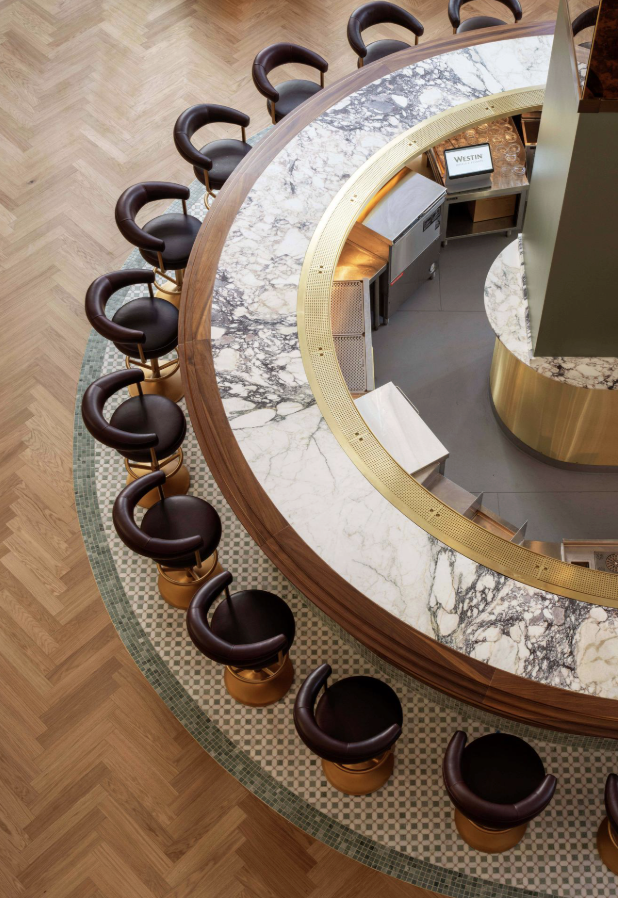
Executive offices and boardrooms can use solid or engineered wood, since solid is generally best kept to low-traffic, climate-controlled rooms.
Retail floors and lobbies call for engineered wood, often glue-down, with attention to entry grit, rolling loads, and walk-off mats at the doors.
Restaurant dining rooms do well with engineered wood and a commercial finish, but spills and cleaning chemicals need to be planned for. Back-of-house kitchens typically need specialized flooring instead of wood.
Hotel and hospitality spaces generally use engineered wood. Schedule pressure is the main factor here, and floating systems can shorten turnaround.
Multifamily common areas use engineered wood and need to stand up to heavy foot traffic and moving-day impact.
Clinical areas in healthcare buildings are usually better served by seamless, non-porous surfaces than by wood.
These are general starting points. The right answer depends on your specific traffic, moisture exposure, and code requirements, so use them as a prompt for conversation with your contractor, not a substitute for one.
Why Engineered Is the Commercial Workhorse
Engineered hardwood has a cross-grain core that gives it significantly better dimensional stability than solid wood, which matters in buildings with variable climate control. Wear layer thickness matters too: a thicker veneer allows sanding and refinishing later, and wear layers of roughly 3 mm or more are commonly cited as enough to support refinishing over a long ownership horizon. VANTIA’s Peak Collection, for example, is a three-layer engineered floor with a 4 mm wear layer, a commercial rating, and a UV-lacquered matte finish, and it can be installed glue-down or floating, including on slab concrete.
What to Look For in a Commercial Wood Flooring Contractor
Commercial Project Experience, With References
Ask for completed commercial projects similar in use and size to yours, and ask to speak with a facilities manager or general contractor who worked with them. A residential portfolio, however beautiful, does not show how a team handles phasing, submittals, and tight turnarounds.
A Written Subfloor and Moisture Process
Commercial buildings often sit on concrete slabs, which can hold moisture long after they look dry. A qualified installer tests before installation, typically using an in situ relative humidity probe method such as ASTM F2170, and checks flatness before any wood goes down. The contractor should be able to tell you what they do when the slab fails the test, not just that they test.
Product Knowledge and Warranty Literacy
Warranty terms can differ sharply between residential and commercial use. VANTIA’s Peak Collection, for instance, carries a 30-year functional guarantee for private-sector use and a 5-year guarantee for public-sector applications. That is not a flaw, it is a reminder to read the terms for your specific use and confirm which category your building falls into before you sign.
Installation Method Expertise
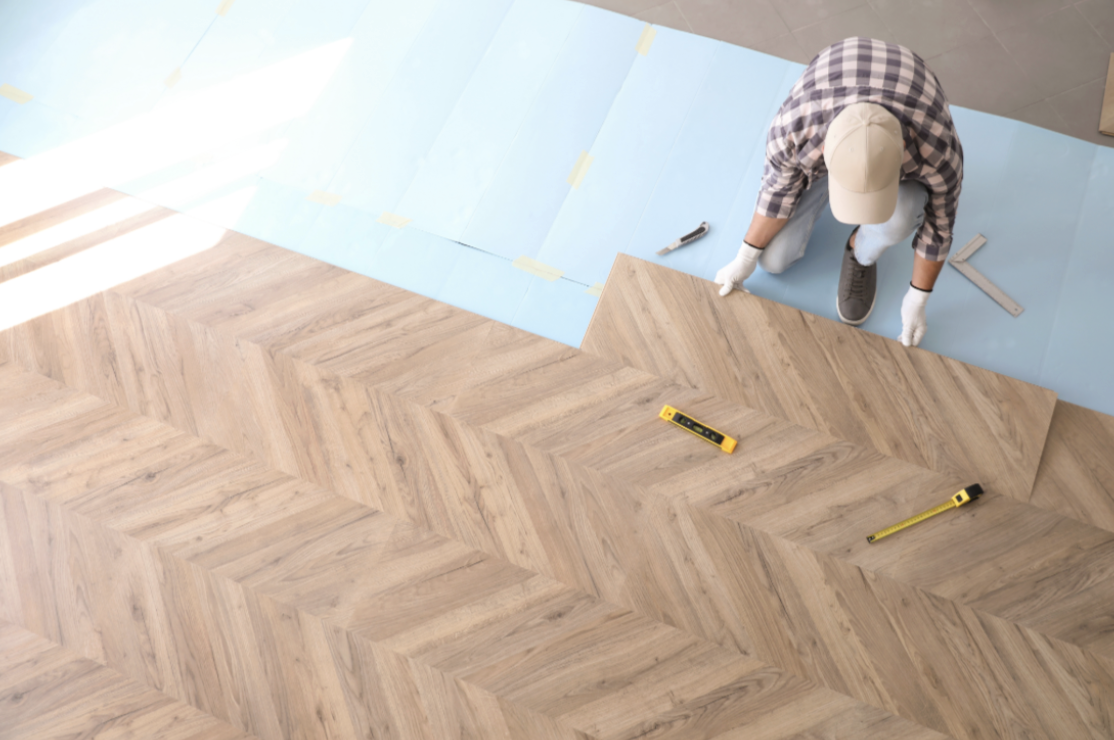
Look for a team comfortable with the full range of methods: nail-down, glue-down, full-trowel glue-down, and floating. VANTIA’s installation services cover all of these, and use full-trowel glue-down for floors over in-floor heat.
A Maintenance Plan, Not Just an Installation
High-traffic floors benefit from a routine: walk-off mats at entries, furniture pads, professional cleaning, and periodic buff-and-coat service every few years, with full refinishing needed only when the finish has worn through to the wood. VANTIA describes recoating, which skips the sanding step, as a service suggested every 3 to 5 years for mildly worn floors. Ask any contractor you consider whether they offer this, and who you would call.
Insurance, Licensing, and Coordination With Your Team
Ask for a current certificate of insurance and confirm licensing requirements with the building owner or general contractor. Also ask how the flooring contractor coordinates with the architect, the general contractor, and other trades, since flooring is often one of the last scopes in the schedule and absorbs delays from every trade before it.
Questions to Ask Before You Hire
- Have you installed wood flooring in commercial buildings like mine? Can I speak to a reference?
- Which product do you recommend for my traffic level, and what is its commercial rating and finish?
- What do the warranty terms say about commercial use and the humidity range my building must maintain?
- How do you test and prepare a concrete slab, and what happens if it fails?
- How will you handle transitions to other flooring so they meet accessibility requirements?
- Can you work in phases or after hours, and how do you control dust and noise?
- What maintenance and recoating or refinishing services do you offer after installation?
Common Myths About Commercial Wood Flooring
Myth: Wood Floors Don’t Belong in Commercial Buildings
- Wood is used in offices, hospitality, retail, and multifamily common areas. The key is specifying the right construction, finish, and maintenance plan for the traffic it will see.
Myth: The Hardest Species Is the Most Durable Choice
- Hardness is only one factor. Finish quality, construction stability, and real-world wear conditions all affect how a commercial floor holds up.
Myth: A Residential Warranty Covers Commercial Use
- Many manufacturers write different terms for commercial or public-sector applications. Always confirm which terms apply to your building before purchase.
Where VANTIA Hardwoods Fits into Your Selection of a Highly Rated Commercial Hardwood Flooring Contractor in Colorado
VANTIA Hardwoods & Interiors is based in Frisco, Colorado, and provides supply, demolition, and installation throughout the greater Rocky Mountain Region, working with builders, architects, designers, and property owners on residential and commercial projects. The company’s in-stock collections include commercial-rated options such as Peak and Classic, both made in Austria as engineered wide plank floors and both stocked in Colorado. Peak is approved for in-floor heat and stocks square-profile stair nosing that meets most stair code requirements, which helps when a project includes stairs.
For projects with sustainability or green-building requirements, VANTIA documents the certifications behind its partner mills, including low-emission compliance and FSC chain of custody, on its sustainability page. Our guide to what makes hardwood flooring sustainably sourced explains how to verify those claims on any product.
Because VANTIA’s in-house team handles material selection, project management, installation, and finishing, one company is accountable from specification through recoating. Contact the team to discuss your building’s scope, schedule, and service area.
Contact VANTIA’s team or request a free sample to review commercial-rated options for your project.
How to Choose a Commercial Wood Flooring Contractor in the greater Denver region
Step 1: Define Your Use and Traffic
List what the floor will face: foot traffic volume, rolling loads, entries, spills, and cleaning methods. This drives every other decision.
Step 2: Confirm Product, Finish, and Warranty in Writing
Get the commercial rating, finish type, and warranty terms for your use category, including the humidity range required to keep the warranty valid.
Step 3: Review Their Subfloor, Transition, and Phasing Plans
A contractor who can explain slab testing, accessible transitions, and how they will phase the work around your operations has done this before.
Step 4: Plan the Maintenance From Day One
Agree on walk-off mats, cleaning products, and a recoating interval before the floor is installed. Ongoing care is what makes a commercial wood floor last.
Frequently Asked Questions
Can you use hardwood flooring in a commercial building?
Yes. Engineered hardwood is widely used in offices, retail, hospitality, and multifamily common areas when it is specified with a commercial-rated finish, the right installation method, and a maintenance plan. Solid wood is generally limited to low-traffic, climate-controlled rooms.
Is engineered or solid hardwood better for commercial spaces?
Engineered is the usual choice because its cross-grain core is more dimensionally stable. A thicker wear layer, such as the 4 mm layer on VANTIA’s Peak Collection, also allows future refinishing.
How does Colorado’s climate affect commercial wood flooring?
Denver is an example of dry air, with winter indoor humidity that can fall far below the commonly recommended range for wood flooring, increasing seasonal gapping, especially in wider planks. Choose a stable engineered construction, confirm the warranty’s humidity requirements, and keep building humidity as consistent as practical.
Do wood floors in commercial buildings have to meet ADA requirements?
Floors on accessible routes must be stable, firm, and slip resistant, and changes in level have limits: up to a quarter inch can be vertical, a quarter to a half inch must be beveled, and anything greater than a half inch must be ramped. Confirm requirements for your building with your architect or the local building department.
How often do commercial wood floors need to be recoated?
It depends on traffic. Many high-traffic floors benefit from a buff-and-coat service every few years, and VANTIA suggests recoating every 3 to 5 years for mildly worn floors. Full refinishing is typically needed only once the finish has worn through to the wood.
Does VANTIA install commercial flooring in the greater Denver and Rocky Mountain region?
VANTIA provides supply, demolition, and installation throughout the greater Rocky Mountain Region and works on commercial as well as residential projects. Contact the team to confirm scope, scheduling, and logistics for your Denver area building.