
What Flooring Is Best for Dogs and Cats?
If you share your home with dogs or cats, one of the most common questions is: What flooring is best for pets?
Pet owners face unique flooring challenges. Scratches from claws, shedding, water bowls, accidents, muddy paws, and everyday wear can quickly take a toll on the wrong floor. The good news is that today’s hardwood flooring options are far more durable and pet-friendly than many homeowners realize.
In this article, we cover the best flooring for pets with quick answers so you can choose flooring that looks beautiful while standing up to life with pets.
Quick Answer
For homes with dogs and cats, the best type of flooring typically offers:
- High scratch resistance
- Strong dent resistance
- Easy cleaning and maintenance
- Water resistance
- Long-term durability
- A finish that hides everyday wear
For homeowners who want real wood flooring that stands up to pets, White Oak engineered hardwood is often one of the best overall choices because of its durability, scratch resistance, and ability to conceal minor wear.
Vantia offers a great selection of engineered flooring that’s eco-friendly and pet-friendly.
What Makes Flooring Pet-Friendly?
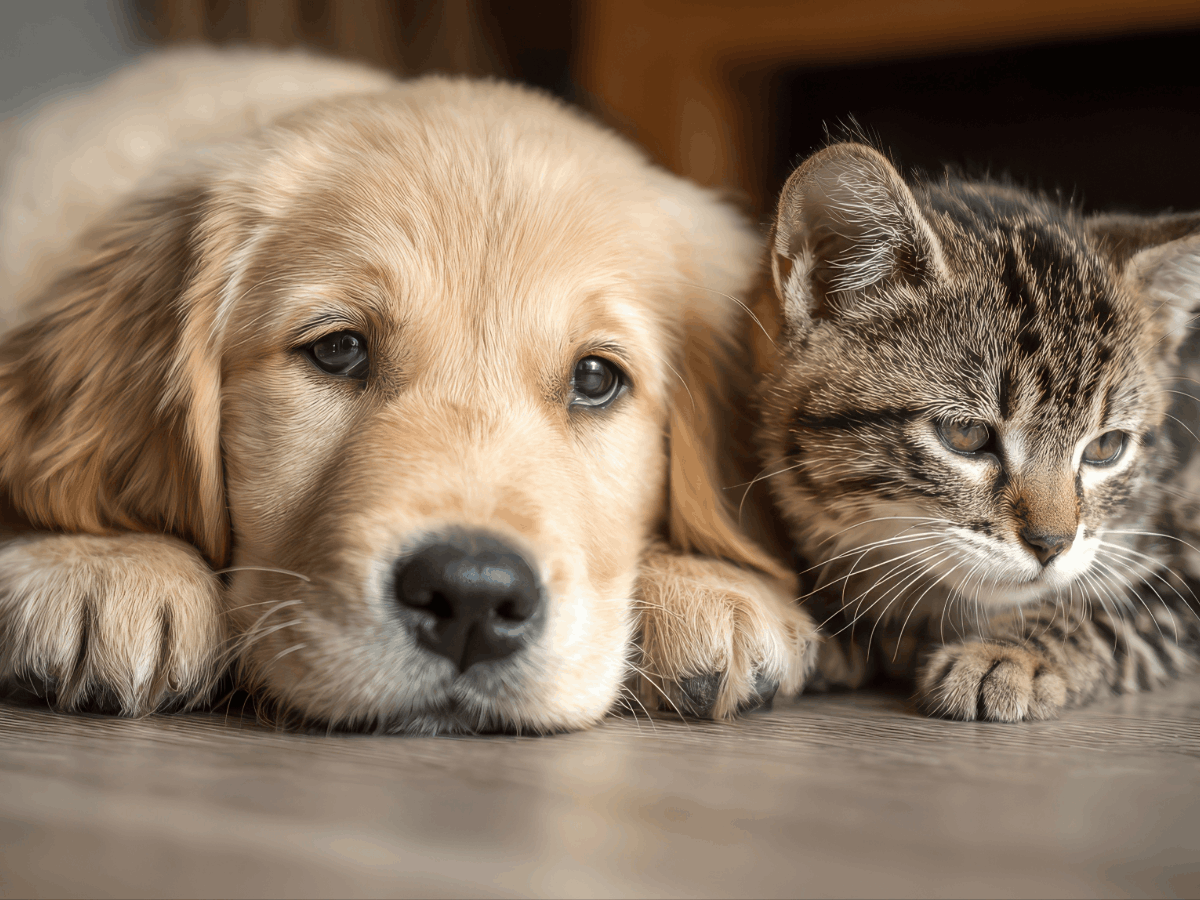
Not all flooring performs the same when pets are involved.
The best flooring for dogs and cats should help manage:
- Scratches from claws
- Pet accidents
- Water spills
- Shedding
- Dirt and debris
- Daily foot traffic
A beautiful floor isn’t enough—it also needs to perform well under real-life conditions.
The Biggest Flooring Challenges for Pet Owners
Before choosing a floor, it’s important to understand what causes the most damage.
Scratches
One of the biggest concerns is claw marks.
Factors that influence scratching include:
- Pet size
- Activity level
- Nail maintenance
- Flooring hardness
- Floor finish
Harder wood species generally resist denting and scratching better than softer woods.
Moisture & Accidents
Pets occasionally create unexpected messes.
Potential issues include:
- Water bowl spills
- Wet paws
- Accidents
- Drool
- Mud tracked indoors
Water resistance becomes increasingly important in pet-friendly homes.
Shedding & Cleaning
Pet hair can quickly accumulate.
The right flooring should make it easy to:
- Sweep
- Vacuum
- Spot clean
- Maintain regularly
Smooth hardwood surfaces are often easier to keep clean than carpeted areas.
Why White Oak Is One of the Best Choices
When it comes to hardwood flooring for pet owners, White Oak, available at Vantia Hardwoods, consistently ranks near the top.
Benefits of White Oak
White Oak offers:
- Excellent durability
- Strong Janka hardness rating
- Tight grain patterns
- Better scratch concealment
- Timeless appearance
The closed grain structure helps minimize the visibility of scratches compared to some other wood species.
Why Pet Owners Like It
White Oak tends to:
- Hide everyday wear better
- Complements many design styles
- Age gracefully over time
- Maintain its appearance in active households
For many homeowners, White Oak provides the best balance between beauty and durability.
Is Engineered Hardwood Better for Pets?
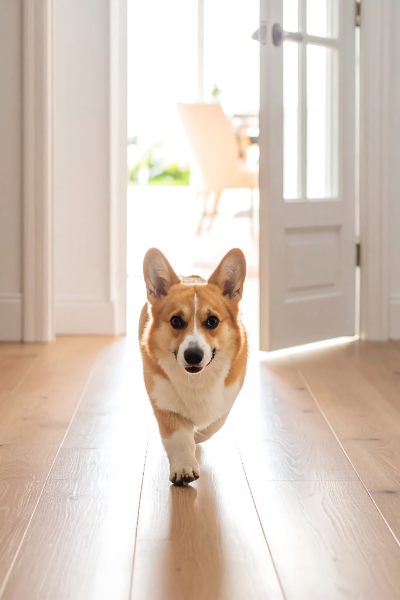
Many pet owners assume solid hardwood is always the best choice.
In reality, engineered hardwood often provides significant advantages.
Benefits of Engineered Hardwood
Engineered hardwood offers:
- Greater dimensional stability
- Better performance with humidity changes
- Wider plank options
- Excellent durability
- Real wood appearance
Many modern engineered hardwood products also feature highly durable factory-applied finishes designed to resist daily wear.
The Importance of the Finish
The finish is often just as important as the wood itself.
Pet-Friendly Finishes
Many flooring experts recommend:
- Matte finishes
- Satin finishes
- Aluminum oxide finishes
- Low-sheen surfaces
These finishes help:
- Hide scratches
- Reduce visible wear
- Make maintenance easier
Glossy floors often show scratches and pet hair more easily than lower-sheen options.
What Flooring Colors Work Best With Pets?
Many homeowners focus only on species and durability.
Color matters too.
Lighter Floors Often Hide More
Lighter hardwood floors can help disguise:
- Pet hair
- Dust
- Minor scratches
- Everyday wear
VANTIA Hardwoods specifically notes that lighter floors tend to show fewer scratches and less visible pet hair than darker flooring options.
Should You Avoid Hardwood If You Have Pets?
Absolutely not.
Many homeowners successfully enjoy hardwood flooring with dogs and cats for decades.
The key is selecting:
- Durable species
- Quality finishes
- Proper installation
- Appropriate maintenance
Modern engineered hardwood products are significantly more pet-friendly than older hardwood flooring systems.
Tips for Protecting Hardwood Floors From Pets
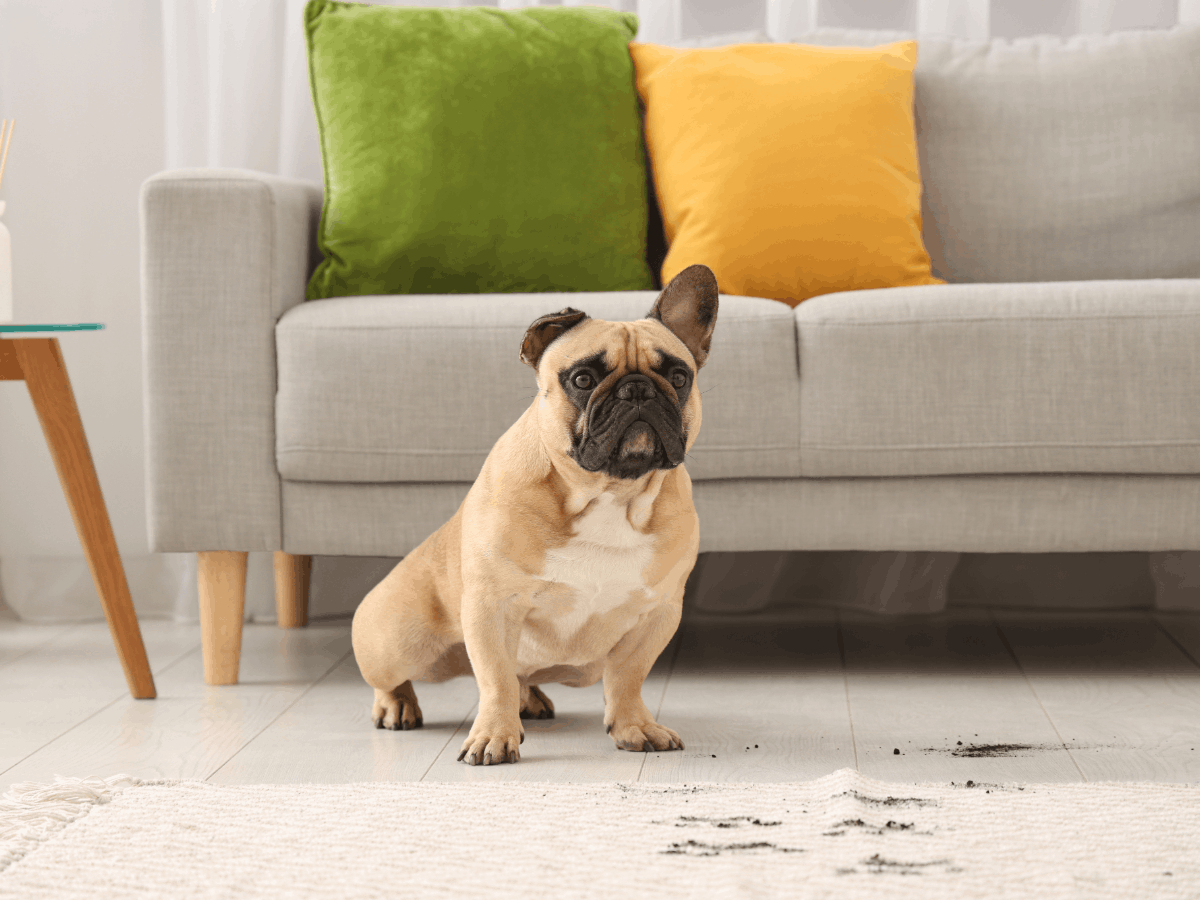
Even the most durable flooring benefits from good habits.
Simple Maintenance Tips
- Keep nails trimmed
- Clean spills quickly
- Use mats near entryways
- Place rugs in high-traffic areas
- Sweep regularly
- Use pet-safe floor cleaners
These small steps can dramatically extend the life of your floors.
Why VANTIA Hardwoods Is a Strong Choice for Pet Owners
At VANTIA Hardwoods, pet-friendly flooring is about balancing performance, durability, and design.
Many homeowners choose VANTIA because of:
- Premium White Oak options
- Durable engineered hardwood collections
- High-performance finishes
- Wide-plank designs
- Flooring selected for real-life durability
Their flooring philosophy focuses on helping homeowners enjoy authentic hardwood floors without sacrificing practicality for active families and pet-friendly households.
Frequently Asked Questions
What hardwood floor is best for dogs?
White Oak is one of the most popular choices because of its durability, grain structure, and ability to hide minor scratches.
Is engineered hardwood good for homes with pets?
Yes. Engineered hardwood offers excellent stability, real wood beauty, and strong durability when paired with quality finishes.
What finish is best for pet owners?
Matte and satin finishes often perform best because they conceal scratches and wear more effectively than glossy finishes.
Are dark hardwood floors bad for pets?
Not necessarily, but darker floors often show pet hair, dust, and scratches more easily than lighter wood tones.