
What's the Best Wood for Accent Walls? (Durability + Style)
A wood accent wall is one of the most visible material decisions you’ll make in a room, which means it’s also one of the easiest to get wrong. Unlike a paint color, it’s not a weekend fix if you change your mind, and unlike a floor, most buying guides don’t tell you what actually threatens a wall’s durability over time (hint: it’s rarely foot traffic).
The right answer depends on the room, the light, and how much the wall will actually be exposed to wear, moisture, or dry indoor air, more than it depends on finding the single “toughest” species. This guide breaks down how wood performs on a wall specifically, then compares the species and products that consistently hold up and look right doing it.
VANTIA Hardwoods & Interiors has over 25 years of experience selecting hardwoods for interiors and working with designers, builders, and homeowners on flooring choices that fit the exact aesthetic you’re looking for.
Quick Answer
For most accent walls, these options consistently perform well:
- White Oak, for the best all-around balance of durability, timeless style, and graceful aging
- Walnut, for a bold, dramatic look that develops a rich patina over time
- Reclaimed Barnwood, for character and durability that’s already been proven by decades of real-world exposure
- Engineered wood wall panels for the most dimensional stability and scratch and dent resistance in high-traffic zones
- Acoustic slat wall panels, when sound control matters as much as the look, typically built on oak or walnut
Durability Matters Differently on Walls Than It Does on Floors
Most “best wood” guides borrow their durability advice from flooring, where hardness (a species’ resistance to denting under foot traffic and dropped objects) is the main concern. On an accent wall, hardness matters far less. What actually threatens a wood wall’s long-term performance is different, and worth understanding before you pick a species.
Indoor Humidity and Wood Movement
Wood is hygroscopic: it gains and loses moisture in response to the surrounding air, and it expands and contracts as it does. Indoor relative humidity below roughly 30 percent, common during winter in homes with forced-air heating, causes solid wood boards to shrink, which is what produces the small gaps homeowners notice between panels in dry months. This applies to wall paneling just as much as it applies to flooring, and it’s a bigger factor in mountain climates, where outdoor air is already dry, and a home’s heating system dries it further. Proper acclimation before installation and stable indoor humidity (most references point to a 30 to 50 percent range) minimize this movement. Engineered panels, built over a stable core, move less than solid wood under the same conditions.
Light Exposure and Fading
Direct or even indirect sunlight changes how wood looks over time, and every species ages differently. Oak tends to deepen and enrich with light exposure in a way that reads as character rather than wear. Walnut starts out rich and dark but actually mellows over time, settling into a warm, inviting patina. Maple and birch, on the other hand, tend to amber or yellow as they age — often unevenly, since the areas getting the most light change faster than the rest. Pine is the one to watch most closely: without a UV-protective finish, it can shift toward an orange cast that a lot of people find less appealing after just a few years.
Since mountain homes tend to have generous windows, an accent wall near all that glass is going to see real light exposure over time. It’s worth weighing your species choice as carefully as your finish — the right combination will age gracefully instead of fighting the sun.
Moisture Zones
A wall in a mudroom, powder room, or near a kitchen sink sees a different moisture load than a living room feature wall. Species selection matters less here than product construction and finish; an engineered panel with a durable factory finish generally tolerates occasional moisture and humidity swings better than an unfinished solid board.
Impact Zones
Hallways, stairwells, and walls near doors or high kid-and-pet traffic do see real impact, from bags, furniture, and everyday bumps. In these specific zones, a harder species (oak, walnut, hickory) or an engineered panel with a reinforced surface holds up better than a softer one like pine or cedar.
Species and Product Deep Dive
FINIUM Decorative Panels
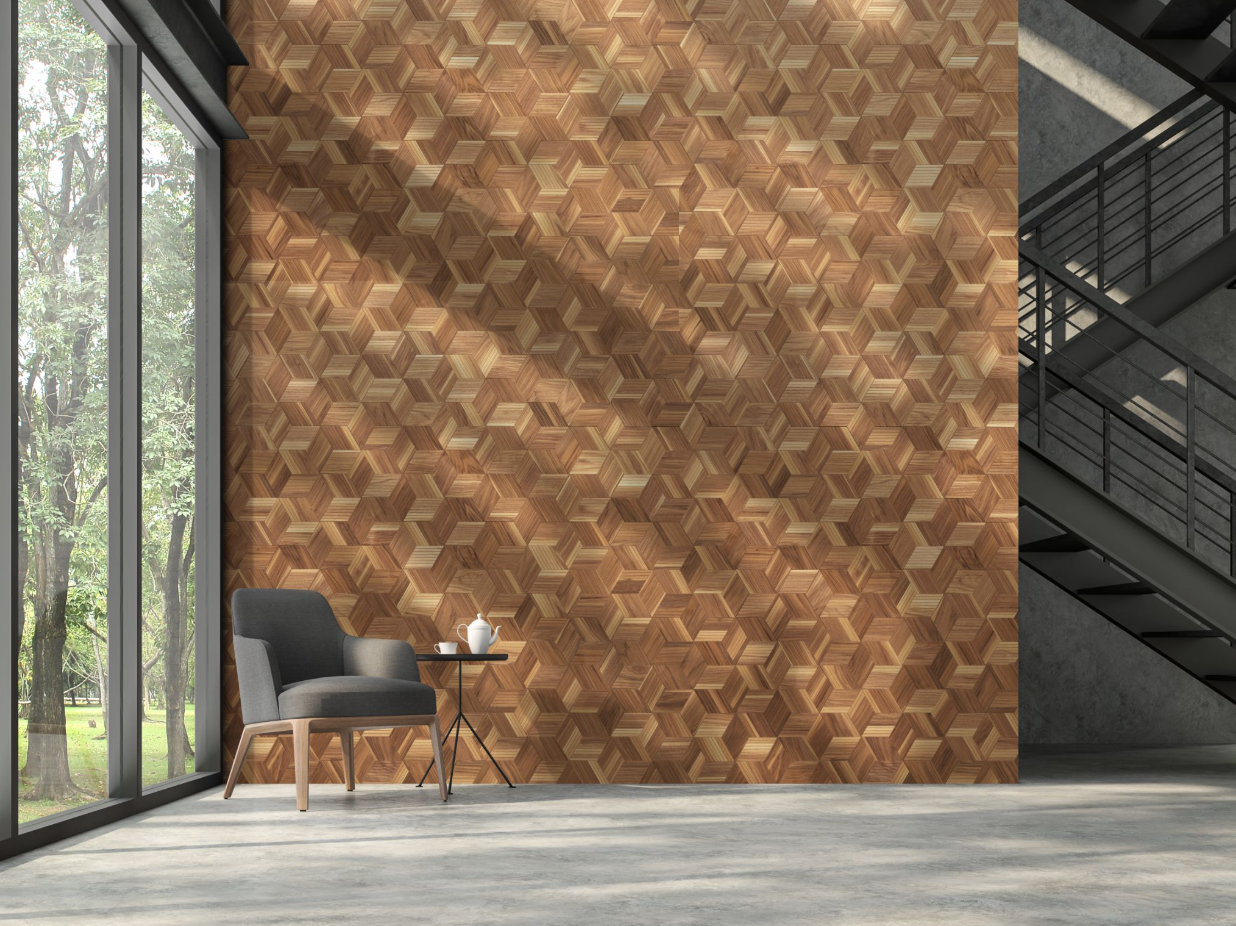
For a more designed, architectural look, in particular fluted, ribbed, or textured surface profiles, VANTIA’s FINIUM line offers decorative wood wall and ceiling panels engineered for consistent durability across residential and commercial settings, with a wider range of surface textures than a single solid species can offer.
Explore FINIUM Decorative Walls
White Oak
White oak is the most versatile choice for accent walls, and it’s easy to see why it shows up in nearly every professional recommendation. It’s hard enough to resist everyday marking, stable enough to move relatively little with humidity changes, and its grain reads as equally at home in a clean contemporary space or a warmer traditional one depending on the finish. It also ages well: rather than looking worn, white oak tends to deepen and enrich in tone over years of light exposure.
Walnut
Walnut brings the drama that oak doesn’t: a deep, chocolate-brown tone with dramatic grain movement that works as a genuine focal point. It’s slightly softer than oak, so it’s better suited to lower-traffic walls (living rooms, primary bedrooms, media walls) than hallways or mudrooms. Over time, it develops a rich, warm patina rather than fading unattractively, provided it has a UV-protective finish.
Reclaimed Barnwood
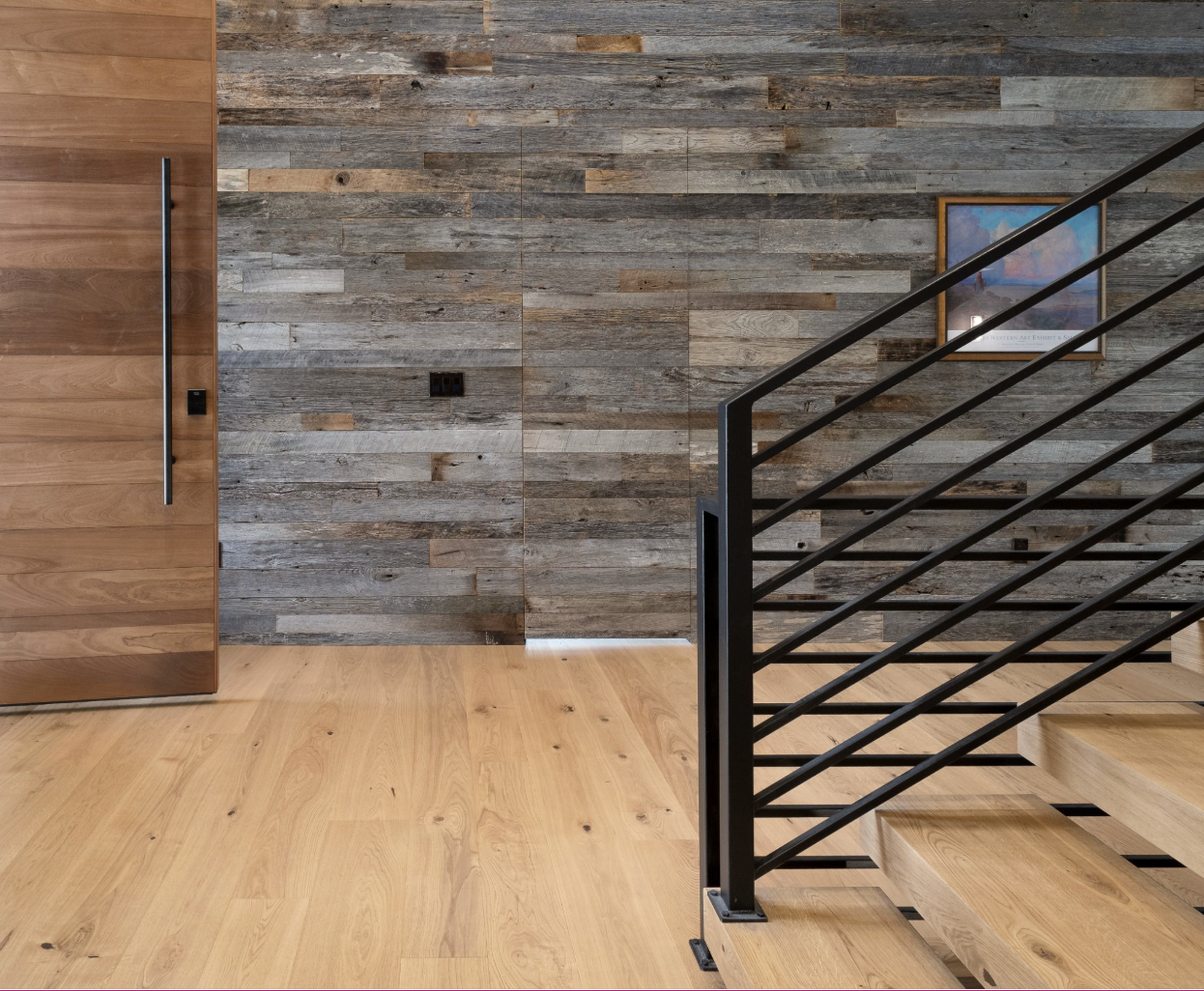
Reclaimed barnwood brings a genuine advantage no new-milled species can claim: it’s already survived decades outdoors before it ever became an accent wall. That means the board you’re installing has already done most of its moving and settling, which translates into real stability once it’s on your wall. It’s also, aesthetically, one of the most requested looks in mountain and rustic-contemporary interiors, since the weathering, nail holes, and patina read as authentic in a way new lumber has to work to imitate. Species varies by lot since the material is reclaimed and salvaged rather than milled to spec.
Explore Barnwood Walls & Ceilings
Engineered Wood Wall Panels
Engineered wall and ceiling panels, built with a real hardwood face over a dimensionally stable core, solve the movement problem more directly than any solid species can. Because the core resists humidity-driven expansion and contraction, engineered panels hold tighter seams through a mountain home’s dry winters and are generally more resistant to scratches, dents, and staining than an equivalent solid board. Any of VANTIA’s engineered hardwood flooring can be installed as wall or ceiling material, giving you the same long-term stability without giving up the look or feel of real wood.
Pine
Pine is the budget-friendly, rustic-leaning choice, and a common one for knotty, character-forward accent walls. It’s noticeably softer than oak or walnut, so it marks more easily in high-traffic zones, and it’s more prone to ambering under UV light without a protective finish. For a low-traffic wall where the rustic character is the point, it’s a legitimate and affordable option; for a hallway or an entryway, it’s usually not the most durable pick.
Poplar
Poplar rarely gets mentioned in wood accent wall conversations, but it’s the professional standard for any accent wall you plan to paint. Unlike pine, it has no knots that bleed through paint over time, and it sands to a smooth enough surface that a quality paint finish performs as intended. If your plan is color, not grain, poplar is worth specifying over a “prettier” species you’ll be covering up anyway.
Comparing Your Options at a Glance
| Species / Product | Hardness / Impact Resistance | Stability Through Humidity Swings | Light Fastness | Best For |
|---|---|---|---|---|
| White Oak | High | Good | Excellent, deepens with age | Most rooms; the versatile default |
| Walnut | Moderate to High | Good | Good, develops patina | Low-traffic feature walls |
| Reclaimed Barnwood | High (old-growth density) | Excellent, already weathered | Excellent, already patinated | Rustic and mountain-style interiors |
| Engineered Panels (Scheucher) | High, reinforced surface | Excellent, stable core | Good, factory-finished | Dry climates, high-traffic zones |
| Pine | Low to Moderate | Moderate | Fair without UV finish | Budget rustic accents, low-traffic walls |
| Poplar | Moderate | Good | N/A, intended for paint | Painted accent walls, wainscoting |
The Acoustic Slat Wall Trend
If you’ve scrolled design inspiration recently, you’ve seen wood slat walls, vertical or horizontal wood battens mounted over an acoustic felt or foam backing. They’ve moved from hotel lobbies and offices into homes because they solve two problems at once: they add texture and warmth to a flat wall, and the felt or foam backing meaningfully reduces echo in open-plan living rooms, home offices, and media rooms.
Wood species has only a marginal effect on the acoustic performance itself, which comes mostly from the density and thickness of the backing material rather than the wood face. That means species selection for a slat wall can be driven almost entirely by style: warm, honey-toned oak and caramel walnut tones are the most requested finishes right now, both leaning into a “quiet luxury,” biophilic aesthetic rather than a high-contrast, high-gloss look.
Where Indoor Climate Still Matters
Even for an interior application, elevation and climate aren’t irrelevant; they just show up differently than they would outdoors. Mountain homes typically run forced-air heat through long, dry winters, and that combination often pushes indoor relative humidity well below the comfortable range for solid wood, more aggressively than it would at lower elevation. The practical takeaways:
- Acclimate solid wood panels to your home’s actual indoor conditions before installation, ideally for several days in the room where they’ll be installed.
- Consider a humidifier if your winters run especially dry, particularly for a large solid-wood installation.
- Lean toward engineered panels for rooms where you want a completely worry-free, gap-free look regardless of season.
- Keep finish maintenance in mind near large windows, since mountain interiors often get more direct light than the same room layout would at lower elevation.
Common Myths About Accent Wall Wood
Myth: The Hardest Wood Is Always Best for an Accent Wall
- Hardness matters in hallways and high-impact zones, but on most accent walls (living rooms, bedrooms, media walls) it’s a minor factor next to humidity stability and light fastness. A gorgeous, moderately hard species like walnut is often the better pick than a harder one that isn’t as suited to the room.
Myth: Solid Wood Panels Never Move Once Installed
- All solid wood continues responding to humidity for as long as it’s installed. Proper acclimation and stable indoor humidity minimize movement, but they don’t eliminate it. If zero movement is the goal, an engineered panel is the more reliable choice.
Myth: Reclaimed Wood Isn’t Durable Enough for a Feature Wall
- The opposite is usually true. Reclaimed barnwood has already weathered decades of real-world exposure and settling before it’s installed, which often makes it more dimensionally stable than a freshly milled board of the same species.
How to Choose the Right Wood for Your Accent Wall
Step 1: Define the Room’s Real Exposure
Is this a low-traffic living room feature wall, or a mudroom or hallway that takes daily bumps and moisture? That answer narrows your species list before style even enters the conversation.
Step 2: Choose Your Style Direction
Light and bright (white oak, ash), bold and dramatic (walnut), or rustic and weathered (reclaimed barnwood, knotty pine) each point toward a different species before you even consider a finish.
Step 3: Decide Solid Wood or Engineered
If your home runs dry in winter, or you want the lowest possible maintenance, an engineered panel will likely outperform a solid board in the long run. If you want the ability to sand and refinish decades from now, solid wood keeps that option open.
Step 4: View Samples in Your Room’s Actual Light
Wood color shifts noticeably under different lighting. Bring samples into the actual room, at the time of day you’ll see the wall most, before finalizing a species or finish.
Why Homeowners Choose VANTIA for Accent Walls
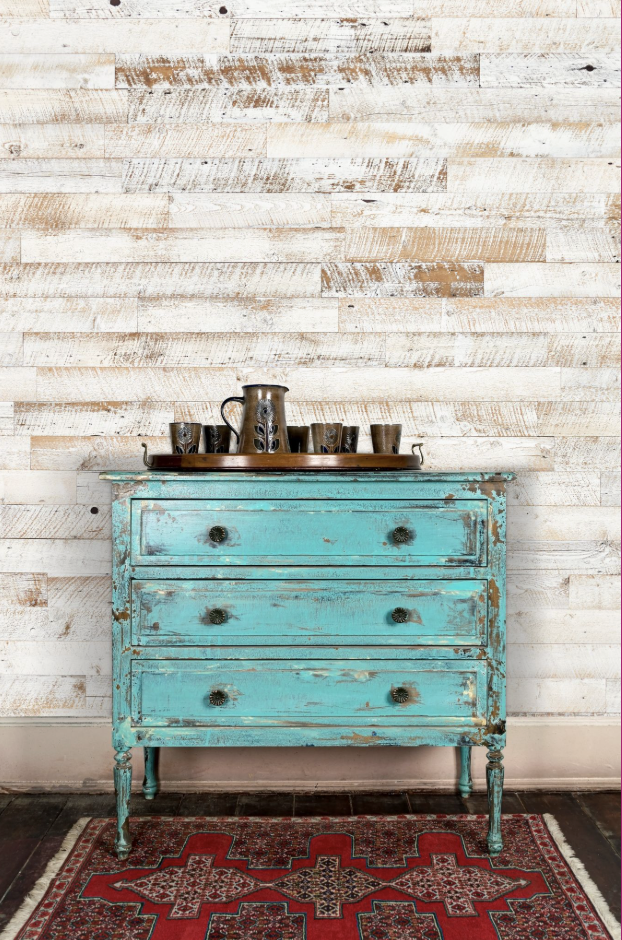
VANTIA carries reclaimed barnwood engineered planks and FINIUM’s decorative panel line side by side, so the recommendation you get is based on your room’s actual conditions rather than a single product catalog. With more than 25 years of hardwood experience and a Frisco, Colorado showroom that sits in the same dry, high-altitude conditions many of our clients are building in, we help match species and construction to the room, not just the mood board.
Frequently Asked Questions
What's the most durable wood for an accent wall?
For most rooms, white oak offers the best overall balance of hardness, dimensional stability, and graceful aging. For high-traffic zones like hallways, an engineered panel with a reinforced surface often outperforms any solid species.
Is reclaimed barnwood durable enough for an accent wall?
Yes. Reclaimed barnwood has already weathered decades of real exposure before installation, which typically makes it more stable, not less, than a freshly milled board of the same species.
Does wood accent wall paneling need special maintenance?
Most wood accent walls need very little: occasional dusting and, for solid wood, monitoring indoor humidity to minimize seasonal gapping. Engineered panels with a factory finish generally need even less upkeep.
Can I put a wood accent wall in a bathroom or kitchen?
You can, though moisture-prone zones call for a durable, well-sealed finish and, ideally, an engineered product over an unfinished solid board. Keep wood paneling away from direct water contact, like inside a shower.
Is engineered wood paneling better than solid wood for accent walls?
Better is relative to your priorities. Engineered panels offer more dimensional stability and resistance to humidity-driven movement, which matters most in dry climates or high-traffic rooms. Solid wood offers the option to sand and refinish decades down the line.
Do wood slat walls need a specific wood species?
Not really. The acoustic performance of a slat wall comes mostly from its felt or foam backing rather than the wood species, so species choice for a slat wall can be driven almost entirely by the look you want.