
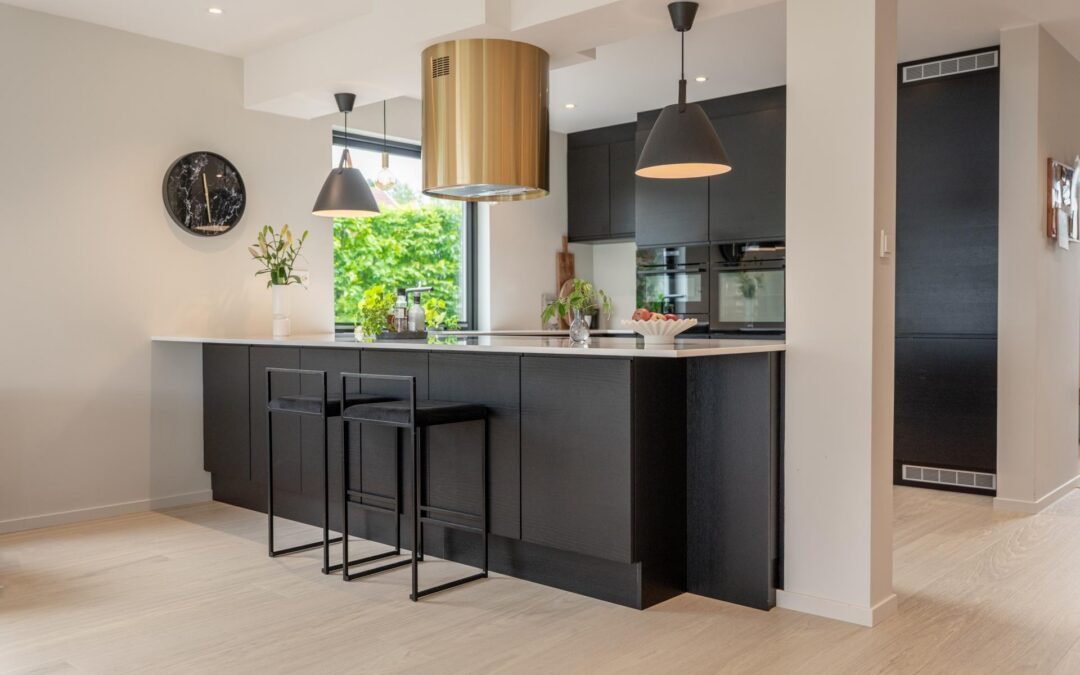
Not all flooring marketed as ‘waterproof’ performs the same, and when it comes to wood, understanding that difference matters.
The demand for waterproof wood flooring is a genuine need. Homeowners want the warmth, texture, and timeless look of hardwood without worrying about everyday spills, wet shoes, or the demands of a busy kitchen. The industry has responded with a wide range of products labeled “100% waterproof,” but those claims are often inconsistent—and sometimes misleading.
In reality, the best-performing wood floors aren’t defined by a label. They’re defined by how they’re built.
Advanced systems like Bjelin Woodura are designed to address moisture at every level, surface, core, and joints, offering a more complete and realistic solution for modern living.
This guide breaks down what waterproof hardwood actually means, what truly works in real homes, and how to choose the right floor with confidence.
Why Waterproof Hardwood Flooring Is in High Demand Today
Rising Demand for Moisture-Resistant Flooring
Kitchens, entryways, and open-plan living areas all share one thing: regular exposure to moisture. Whether it is cooking splashes, wet shoes, or a pet coming in from outside, modern homes need flooring that can handle everyday wear and moisture exposure. That is why water-resistant wood flooring has become one of the most searched categories in the industry, and why getting the choice right matters.
How Marketing Has Shaped the Waterproof Hardwood Flooring Trend
When a product is labeled waterproof wood flooring, that claim can mean different things depending on the brand. Some are referring to the surface coating. Others mean the core material. A few are describing the joint system between planks. Very few products cover all three. Understanding what a waterproof claim actually includes and what it does not is the first step in making the right flooring decision.
Can Wood Flooring Really Be Waterproof?
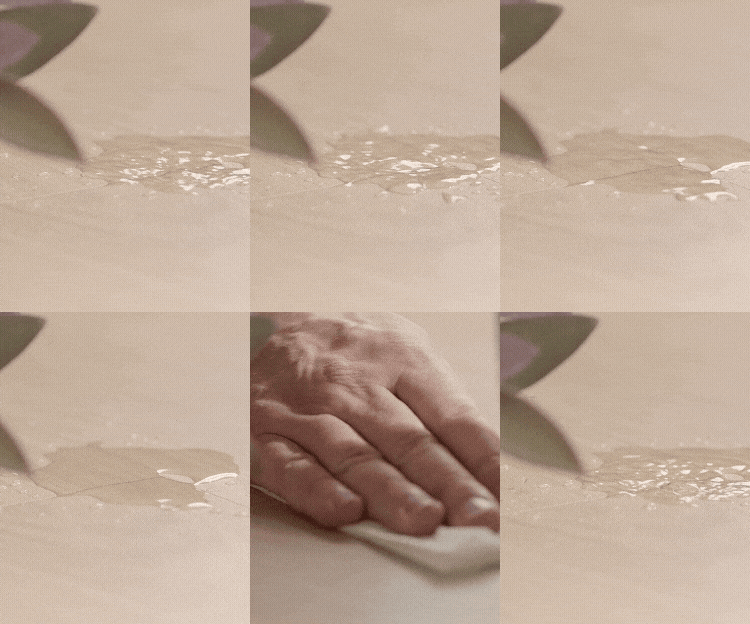
The Reality of Natural Wood: Wood is a natural material. It responds to its environment, absorbing moisture, expanding, and contracting over time.
Because of this, true waterproof hardwood does not exist. No solid wood floor can remain unaffected by prolonged water exposure.
What “Waterproof” Actually Means
What does exist are engineered systems designed to resist moisture in practical, everyday conditions.
The difference is important:
- Water-resistant flooring handles spills when cleaned promptly
- Advanced engineered systems are built to slow, block, and manage moisture more effectively
The goal isn’t to make wood invincible, it’s to make it livable.
What Actually Makes a Wood Floor Perform
Not all “waterproof” claims are equal. Real performance comes from how the floor is constructed.
1. A Durable Surface
A high-quality finish or hardened wood surface slows moisture from penetrating the top layer—giving you time to respond to spills.
2. A Stable Core
A dense, moisture-resistant core reduces movement and helps prevent swelling or warping.
3. Protected Joints
The seams between planks are the most common failure point. Without proper sealing, water can reach the subfloor quickly.
This is where systems like Bjelin Woodura stand apart.
A Better Approach: Hybrid Wood Flooring Systems
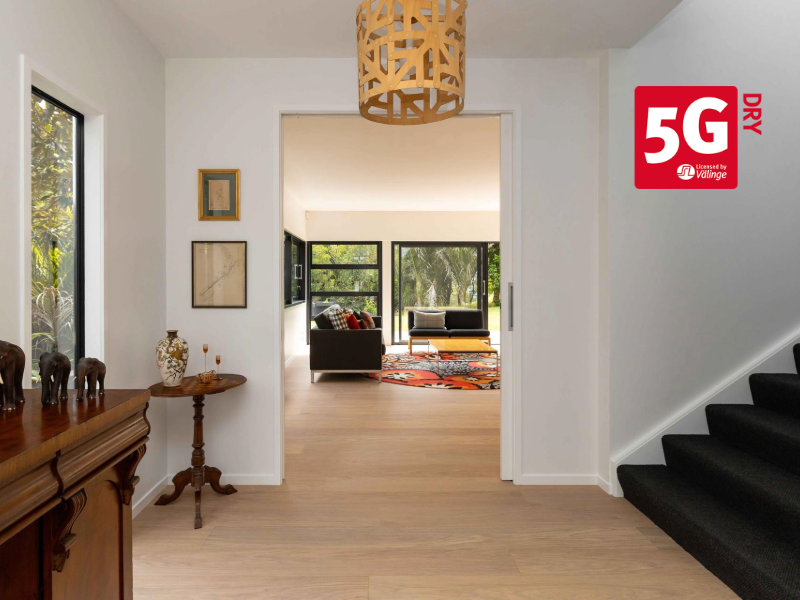
The most advanced category of wood flooring addresses moisture at every level, not just the surface.
Bjelin Woodura is one of the clearest examples of this approach.
- Its Woodura® surface technology fuses real European oak onto a high-density core, creating a surface that is significantly harder and more resistant to wear
- Its 5G® Dry locking system is designed to seal plank joints, helping prevent water from penetrating through seams
- Its high-density wood fiber core improves overall stability in changing environments
The result is a floor that allows you to enjoy real wood the way it was meant to be lived on, without second-guessing every spill or wet footprint.
Where Waterproof Wood Flooring Actually Works Best
No single product fits every space. The key is matching the floor to how the room is used.
Dry Living Areas
In spaces with minimal moisture exposure, traditional solid or engineered hardwood remains the gold standard for beauty and long-term value.
Kitchens, Entryways & High-Traffic Areas
These spaces require more than a surface-level solution.
They benefit from engineered systems designed for real-world conditions, where spills, humidity, and daily wear are part of everyday life.
This is where Bjelin Woodura becomes a strong, practical choice, offering the look of hardwood with performance built for modern living.
Best Waterproof Hardwood Flooring Options by Room Type
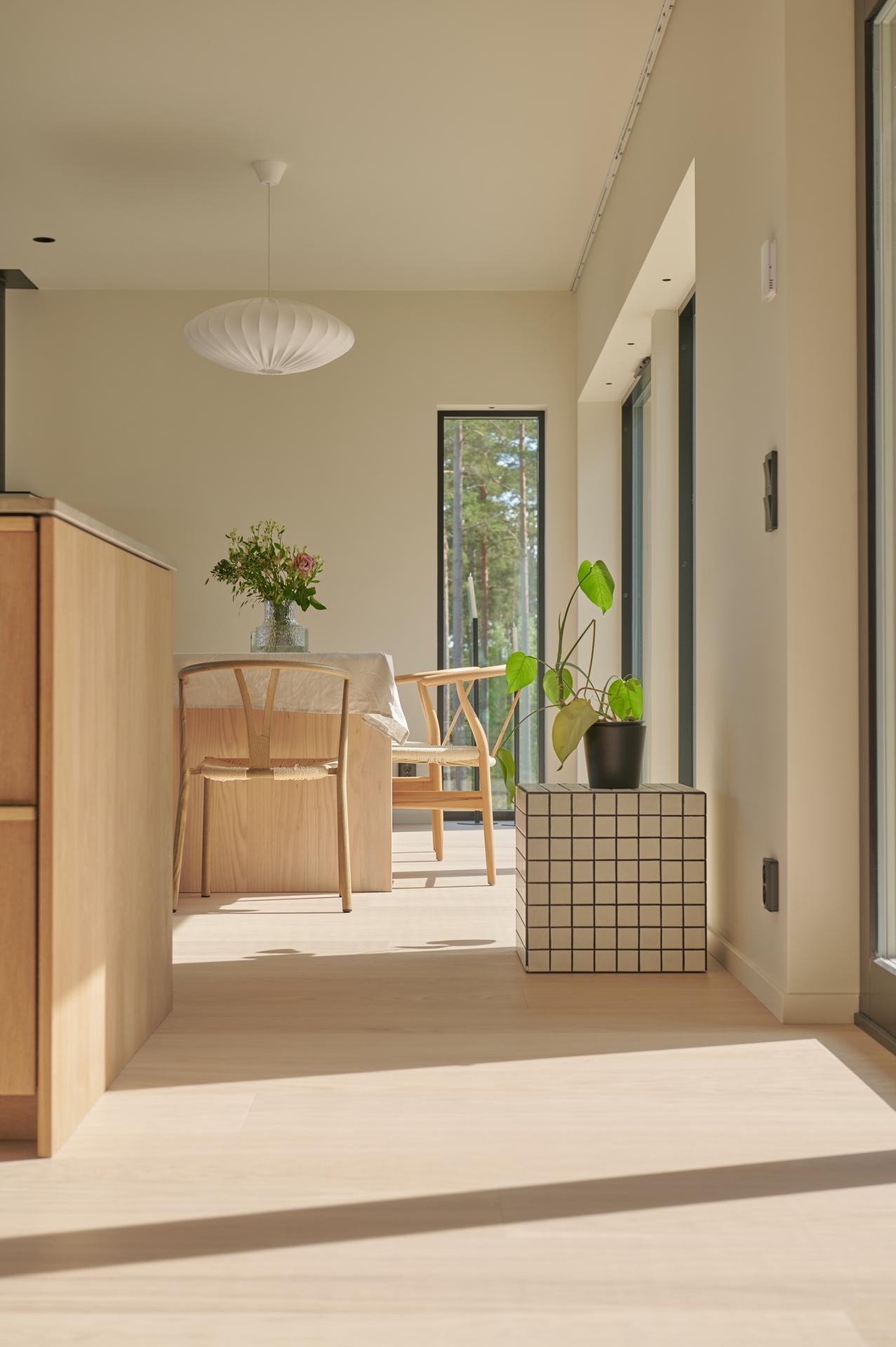
No single product is the right answer for every room. The goal of choosing hardwood is to match the flooring selection to the space’s actual needs.
Best Flooring for Dry Areas
For spaces where moisture is not a regular concern, premium solid or engineered hardwood is the strongest choice in terms of beauty, durability, sustainability, and long-term home value. These are the spaces where hardwood performs well.
Best Waterproof Flooring for Kitchens and Moisture-Prone Areas
These spaces need more than a water-resistant surface finish. They need an engineered hardwood waterproof system; a floor built with a moisture-resistant core, a quality sealed finish, and a joint system that keeps water from reaching the subfloor.
Bjelin Woodura, available at VANTIA, is specifically engineered for these conditions. Its Woodura surface, high-density core, and 5G Dry locking system address moisture at every level of the product, making it one of the most capable wood flooring options for kitchens and high-traffic areas.
Is Waterproof Wood the Right Flooring Type for Your Space?
A high-performance wood floor makes sense if:
- You want real wood, not vinyl or synthetic alternatives
- You’re installing in a kitchen, entryway, or active living space
- You’re concerned about spills, pets, or everyday wear
- You value long-term performance over short-term cost
If that sounds like your project, this category of flooring is worth serious consideration.
Requirements for Waterproof Flooring Installation and Upkeep
Even the best flooring system depends on proper execution.
- Subfloor preparation is critical in moisture-prone areas
- Installation method affects long-term performance
- Humidity control helps maintain stability over time
- Quick spill cleanup is still essential
No floor is designed for standing water indefinitely, but the right one will give you time, protection, and peace of mind.
How to Spot Misleading “Waterproof” Claims
As you evaluate options, watch for:
- “100% waterproof” claims that exclude standing water in the warranty
- No mention of joint protection or subfloor requirements
- Products positioned as equivalent despite major construction differences
- Sales approaches that focus on the label, not your space
A quality recommendation should always start with how and where the floor will be used.
Choosing the Right Floor Starts with the Right Conversation
At VANTIA, the focus isn’t on selling a product, it’s on specifying the right match for your particular space.
Every recommendation considers:
- The room
- The subfloor
- The environment
- How the space is lived in day to day
Because a floor should perform just as well in real life as it does on paper.
Find the Right Floor for Your Space
If you’re exploring waterproof wood flooring and want to understand what will actually perform in your home, we’re here to help.
Explore your options with a VANTIA specialist and see if a system like Bjelin Woodura is the right fit for your project.
FAQ:
Is waterproof wood flooring actually real?
Not completely. Solid wood isn’t waterproof. Most waterproof hardwood flooring refers to engineered wood with moisture-resistant cores and sealed joints designed to handle spills, not prolonged standing water.
What is the difference between waterproof and water-resistant wood flooring?
Water-resistant wood flooring handles spills if cleaned quickly. Waterproof claims usually apply to specific features like cores or seams, not the entire floor under all conditions.
Is engineered hardwood flooring waterproof?
Standard engineered hardwood is water-resistant, not waterproof. Advanced options with sealed joints and moisture-resistant cores offer better protection but still require proper installation and maintenance.
Is vinyl plank better than hardwood for moisture-prone areas?
Vinyl is fully water-resistant and better suited for heavy moisture. However, engineered hardwood offers a more natural look, durability, and long-term value for most residential spaces.
What is the best wood flooring for kitchens or humid areas?
High-quality engineered hardwood with sealed joints and moisture-resistant cores works best. Options like Bjelin Woodura perform well when installed correctly with proper subfloor preparation.