
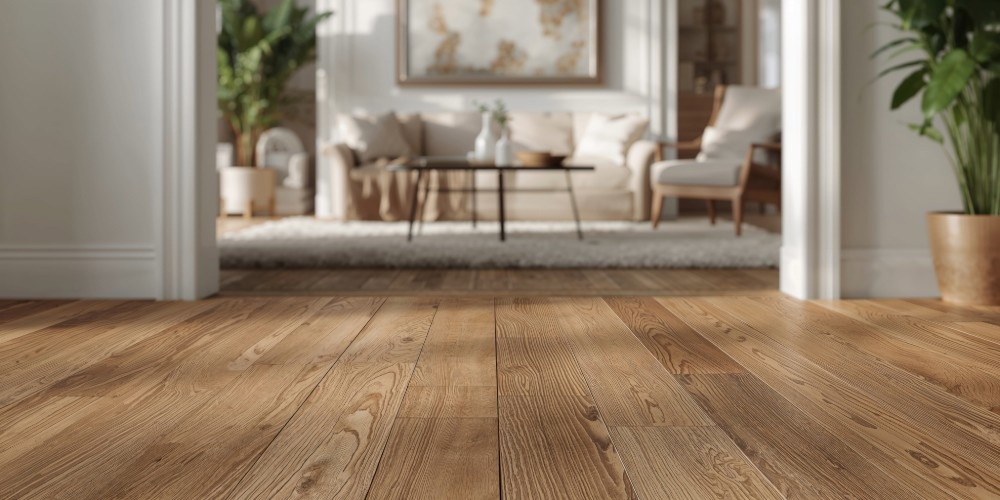
When most people think about hardwood flooring, they typically consider the wood species, plank width, or color. The finish rarely comes up first, but it should.
The finish is what you’re actually walking on every day. It’s the protective layer that stands between your wood and everything life throws at it: foot traffic, spills, pet claws, UV rays, and years of everyday use. Get it right, and your floors stay beautiful for decades. Get it wrong, and even the best wood flooring will start showing its age far sooner than it should.
Whether you’re looking at solid hardwood for a classic residential feel or prefinished hardwood flooring for a faster installation, understanding what different finishes actually do, and where they perform, makes a real difference in the long run.
Why Hardwood Floor Finishes Matter More Than Many People Realize
It’s easy to fall in love with a wood species and overlook what’s coating it. But the finish is doing a lot of heavy lifting, more than most homeowners realize until something goes wrong.
The Finish Is the Floor’s First Line of Protection
Think about what your floors deal with on any given day. Foot traffic, wet shoes, dropped things, furniture being dragged, pets, and direct sunlight. The finish is the first thing that takes the hit on all of that. A well-chosen hardwood floor finish helps protect against:
- Scratches and scuffs from foot traffic and furniture
- Moisture exposure from spills and humidity
- UV discoloration from direct sunlight
- General surface wear that builds up over time
The Finish Influences the Overall Appearance of the Floor
The finish also directly affects the visual character of your wood flooring. Some finishes deepen the grain and warm the tone. Others keep things light and natural-looking. The sheen level -matte, satin, or gloss- changes how light moves across the room and how formal or relaxed the space feels.
These aren’t small details. They’re the difference between a floor that looks right in your home and one that doesn’t quite land, even if the wood itself is beautiful.
Residential and Commercial Spaces Have Different Performance Needs
While residential finishes prioritize family-friendly attributes like low VOCs and easy upkeep, commercial specifications require a different calculus. For restaurants, offices, and retail environments, the emphasis shifts to enduring heavy foot traffic, extending the lifecycle of the floor, and ensuring a swift installation process.
Neither is better than the other. They’re just different conversations.
The Most Common Types of Hardwood Floor Finishes
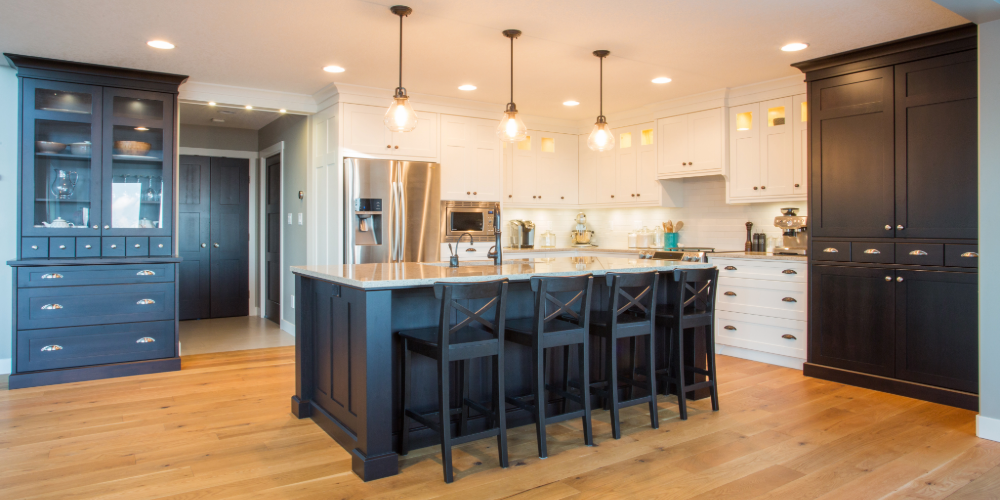
Not every hardwood flooring option calls for the same finish. Here’s what you need to know about each type and where each one makes the most sense.
1. Natural Oil Finishes
Natural oil finishes work differently from most others. Instead of sitting on top of the wood as a coating, they penetrate the surface and cure from within. The result is a floor that genuinely looks and feels like real wood, with a natural matte sheen, visible grain, and warmth that’s difficult to replicate with a surface coating.
Key Characteristics
Natural oil finishes are known for their matte appearance and their ability to enhance the wood’s natural texture and grain. They create a softer, more organic look that works especially well in luxury residential interiors where character and authenticity matter.
Benefits
One of the biggest advantages of natural oil finishes is easier spot repair compared to many surface-coated systems. They also preserve the authentic aesthetic of the hardwood, making them a popular choice in high-end residential designs.
Considerations
The trade-off is maintenance. Oil-finished floors typically require periodic re-oiling depending on traffic and conditions. They’re also more vulnerable to moisture and scratching compared to polyurethane surface coatings.
2. Polyurethane Finishes
Polyurethane remains one of the most commonly used hardwood floor finishes because of its durability and long-term surface protection. It is available in both oil-based and water-based formulations.
a. Water-Based Polyurethane
Water-based polyurethane has become the preferred choice for many modern hardwood flooring projects. It dries faster, produces lower odor levels, and preserves the natural appearance of the wood without adding an amber cast.
Key Characteristics
This finish provides a clear, natural-looking appearance along with faster drying and curing times. It also produces lower VOC emissions compared to oil-based systems.
Benefits
Water-based polyurethane is often considered a more environmentally conscious option because it supports better indoor air quality while still offering excellent scratch resistance in modern formulations. It also maintains a more consistent color over time.
Why It Has Become Increasingly Popular
Modern water-based finishes have evolved significantly in durability and performance. Today, they are widely preferred in both residential and commercial projects because they combine cleaner aesthetics with strong long-term protection.
b. Oil-Based Polyurethane
Oil-based polyurethane has been the industry workhorse for decades. It builds a tough, amber-toned coat that gives wood a warm, classic appearance, the look many homeowners still associate with traditional hardwood flooring.
Key Characteristics
This finish is recognized for its rich amber tone, traditional aesthetic, and durable protective coating that performs well in everyday residential environments.
Benefits
Oil-based polyurethane offers strong wear resistance and works particularly well in traditional interiors and on darker wood species, where the warmer tone enhances the overall appearance.
Limitations
It does, however, come with longer drying and curing times. The finish also produces higher VOC emissions during installation and may yellow over time, especially on lighter wood species.
3. Tung Oil Finishes
Tung oil is one of the oldest wood finishes still used in hardwood flooring today, and it continues to appeal to homeowners looking for a more handcrafted, artisan-style appearance. Like natural oil finishes, it penetrates the wood rather than sitting on top, helping preserve the texture and grain definition of the hardwood.
Key Characteristics
Tung oil finishes are known for their warm, handcrafted appearance and strong grain definition. Because the finish penetrates the wood, it creates a more natural and organic look rather than a heavy surface coating.
Benefits
Tung oil enhances the natural character of the hardwood while adding subtle depth and richness to the grain. When properly applied, it also offers a level of natural moisture resistance that can work well in residential environments where craftsmanship and authenticity are central to the design.
Considerations
Like most penetrating oil finishes, tung oil requires ongoing maintenance over time to preserve its appearance and performance. It’s also less commonly used in high-traffic commercial spaces where maximum durability and lower maintenance are typically priorities.
4. Aluminum Oxide Finishes
Aluminum oxide finishes are factory-applied finishes commonly found on prefinished hardwood flooring. They’re engineered specifically for maximum scratch resistance and are considered one of the most durable hardwood floor finish options available today.
Key Characteristics
Aluminum oxide finishes create an extremely durable protective layer designed to withstand heavy wear and daily traffic. Because the finish is factory-applied, it delivers a highly consistent and long-lasting surface performance.
Benefits
These finishes provide exceptional scratch resistance and long-term durability, making them a strong choice for busy households, homes with children or pets, and commercial environments where wear resistance is a priority. The installation process is also typically faster and cleaner since no on-site curing is required.
Considerations
The trade-off is repairability. Since aluminum oxide finishes are factory-applied, spot repairs and refinishing can be more complex compared to traditional site-finished hardwood floors. While extremely durable, they can be more difficult to update incrementally over the life of the floor.
Oil vs. Water-Based Polyurethane: How They Actually Compare
This is the question we get asked most often. Both work. But they work differently, and the right choice depends on what you’re asking your floor to do.
How They Look
Oil-based finishes add an amber warmth to the wood over time. On darker species like walnut or red oak, this can be a beautiful thing; it deepens the richness of the grain. On lighter woods like ash or maple, it can shift the color more than you’d want.
Water-based finishes are clear. They show the wood as it is, no color addition, no amber drift. If you want your floor to look in five years the way it looked the day it was installed, water-based is the more predictable choice.
How They Affect Your Project Timeline
Oil-based polyurethane typically requires 24 hours or more between coats and a full cure period of several days before you can move back in.
Water-based dries fast enough to apply multiple coats in a single day. That shortens the overall hardwood flooring installation timeline and reduces how long the space needs to remain empty, something that matters a lot for families, businesses, and commercial projects with tight schedules.
Indoor Air Quality and VOC Levels
This is where the difference becomes especially important. Oil-based systems release high levels of volatile organic compounds (VOCs) during and after application. The smell is strong, the off-gassing continues for days, and the space should ideally not be occupied.
Water-based systems emit far fewer VOCs and much less odor. If you’re installing in a home with children or anyone with respiratory sensitivities, or in a business that can’t fully vacate, water-based is the responsible specification, not just a preference.
Durability
Historically, oil-based was considered the more durable option. That’s no longer true across the board. High-quality water-based polyurethane now matches or exceeds oil-based performance in scratch resistance and wear, especially in modern formulations designed for commercial use.
What matters most is product quality. A premium water-based finish outperforms a budget oil-based system every time.
Why Water-Based Finishes Have Become the Industry Standard
The shift toward water-based polyurethane in the hardwood flooring industry isn’t a trend; it’s a response to real improvements in performance and growing awareness of what matters in a home or commercial environment.
Designers, contractors, and flooring specialists are increasingly specifying water-based systems as the default because they deliver on every dimension that matters:
-
- Better indoor air quality from significantly lower VOC emissions
- Faster drying that shortens hardwood flooring installation time
- Scratch and wear resistance that now rivals oil-based systems
- A cleaner, truer wood appearance that doesn’t shift color over time
- No yellowing, the floor looks the same at year ten as it did at installation
The Water-Based Innovations: PUROtec® & TENSEO X-MATT


One of the clearest examples of how far water-based finishing technology has come is Scheucher’s innovative PUROtec® and TENSEO X-MATT surfaces. This state-of-the-art technology eliminates the old compromise between how you want your floor to look and how you need it to perform.
PUROtec®: The Ultimate Invisible Protection

PUROtec® delivers a floor that looks beautifully organic and feels entirely natural underfoot, yet outperforms traditional oil-finished floors under heavy-traffic conditions. It offers a healthier indoor environment with ultra-low VOC emissions and demands incredibly easy maintenance—meaning no demanding re-oiling schedules, and no periodic stripping or recoating.
TENSEO X-MATT: Low-Sheen Brilliance

For those who prefer a touch more luster while retaining that coveted matte aesthetic, VANTIA loves utilizing TENSEO X-MATT. Powered by the same revolutionary, solvent-free excimer technology as PUROtec®, TENSEO X-MATT simply differs in its slightly lower degree of matting, offering a stunning, natural low-sheen optic (gloss level 8–10).
By utilizing high-energy UV light to create a microscopic, continuous protective skin, this finish delivers an array of high-performance characteristics at a glance:
- Exceptional Resilience: Highly scratch- and abrasion-resistant with excellent chemical resistance.
- Effortless Living: Practically maintenance-free, easy to clean, and fully water- and dirt-repellent.
- Pristine Longevity: Features an anti-footprint effect and minimized UV color change to keep the wood’s character intact over time.
- Future-Proof: The surface remains completely sandable and restorable down the road.
SEDA: The Time-Honored Tradition of Oiled & Waxed Parquet


If your priority is direct, tactile contact with raw wood, VANTIA proudly recommends Scheucher’s SEDA surface treatment. Adhering to century-old traditions, SEDA treats the parquet with natural oils and waxes that air-dry naturally through oxidation.
Rather than forming a plastic-like film over the wood, the oil penetrates deep into the pores, providing a profound impregnation while keeping the surface entirely open-pored and breathable. The result is a silky-matte surface with a wood color that is wonderfully warm to the feet. Because SEDA floors actively regulate humidity and prevent static charging, they guarantee a particularly healthy, bioclimatic indoor atmosphere.
The True Value of a SEDA Floor:
- Lifelong Value Retention: If the “signs of the times” ever catch up to your floor, a SEDA parquet can be fully renovated and re-oiled using a thorough basic cleaning—eliminating the need to sand down the precious wood wear layer. This unique feature gives oiled floors a much higher long-term value than traditional lacquered floors.
- Effortless Partial Repair: SEDA is ideal for highly stressed areas because scratches or minor localized damage can be partially repaired and re-oiled seamlessly, without having to refinish the entire room.
- Everyday Resilience: Despite its natural composition, it requires little maintenance effort (supporting both dry and damp cleaning), is highly water and dirt-repellent, and is remarkably resistant to common household chemicals.
How to Choose the Right Finish for Your Project
No formula spits out the perfect hardwood flooring finish for every situation. But there are a few questions worth working through before you decide.
How much traffic does the space get? High-traffic areas, whether it’s a busy family kitchen or a commercial lobby, need a finish engineered for that level of demand. Durability should come first.
How much maintenance are you willing to do? Natural oil finishes look incredible but need regular attention. Water-based polyurethane systems are significantly more hands-off. Be honest about what you’ll actually keep up with.
What do you want the floor to look like? Matte and natural finishes create a softer, more contemporary feel. Higher gloss finishes read as more formal. The finish defines the room as much as the wood species does.
Who’s going to be in space? Young kids, pets, allergen sensitivities, these all factor in. Low-VOC finishes and durable wear layers matter more in homes with young families.
Is this prefinished or site-finished? Prefinished hardwood floors offer speed and a factory-level wear layer. Site-finished floors offer more customization and a seamless surface. Both are valid; the right choice depends on your priorities.
Working with an experienced team like VANTIA Hardwoods takes the guesswork out of it. The right finish isn’t just about protecting the floor; it’s about choosing a system that fits the way the space is meant to look, feel, and function over time.
Frequently Asked Questions
What is the best finish for hardwood floors?
For most modern homes and commercial spaces, water-based polyurethane offers the best balance of durability, low VOCs, and natural appearance.
Is water-based polyurethane better than oil-based?
In many cases, yes. It dries faster, has lower VOC emissions, and maintains the wood’s natural color better over time.
What are the different types of hardwood floor finishes?
Common hardwood floor finishes include natural oil, tung oil, oil-based polyurethane, water-based polyurethane, and aluminum oxide finishes.
Which finish is best for homes with pets and kids?
Water-based polyurethane and aluminum oxide finishes are ideal because they offer strong durability and scratch resistance.
How long does a hardwood floor finish last?
Depending on the finish type and maintenance, hardwood floor finishes can last anywhere from a few years to over a decade before refinishing is needed.