
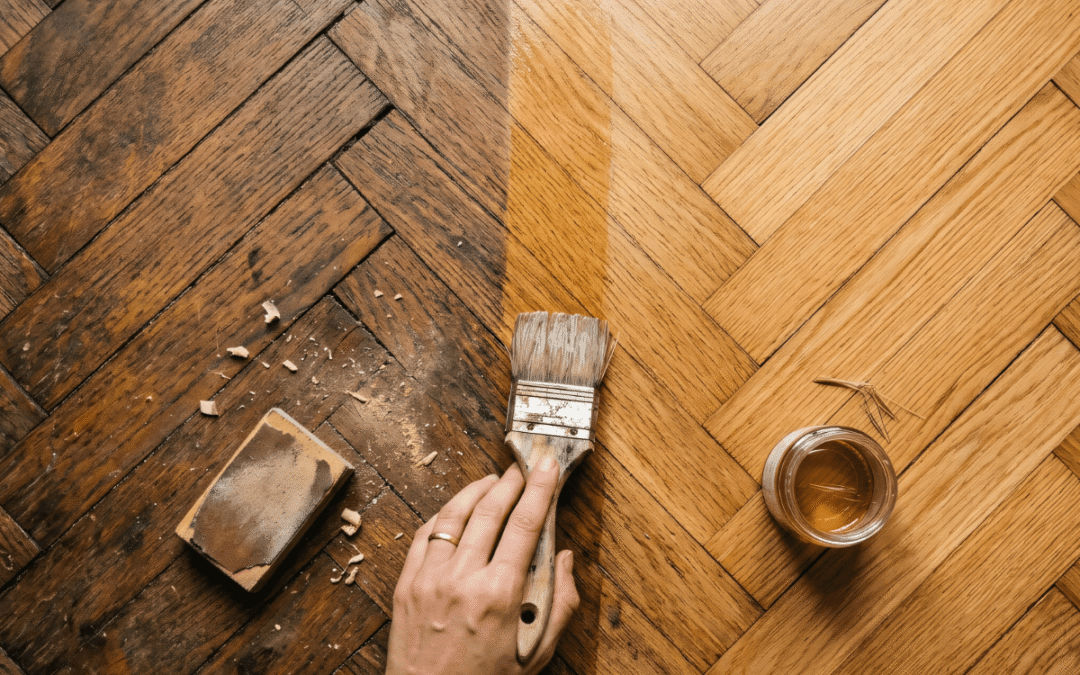
Have you ever looked at your hardwood floors and wondered whether they still have life left in them — or whether it’s finally time to start fresh?
It’s a question many homeowners struggle with, and honestly, it’s not always straightforward. The scratches might be surface-deep, or they might be telling a bigger story. The dull finish might just need a quick refresh. Or the boards underneath could be hiding real structural problems.
The good news? Hardwood floors are one of the most resilient investments you can make in a home. And before you start budgeting for new flooring, it’s worth knowing that there are actually four options on the table — not two. Most homeowners jump straight to “refinish or replace” and skip two steps that could save them significant time and money. This guide provides a comprehensive overview, enabling you to make the right decision for your floors.
The Four-Step Framework: From Least to Most Invasive
When your floors start showing their age, the right response almost always starts with the least invasive option and works up from there. Here’s how the progression looks:
Reoil → Recoat → Refinish → Replace
Each step is more involved than the last. The goal is to find the one that solves the problem without going further than you need to.
Option One: Reoil
What It Is
If your floor was finished with a natural oil — rather than a lacquer or polyurethane — reoiling may be all it needs. A reoil is exactly what it sounds like: a fresh application of penetrating oil that replenishes the finish from within the wood rather than sitting on top of it. It restores depth, richness, and that just-installed warmth that faded over time.
When It’s the Right Call
- The floor looks dull, dry, or slightly faded, but has no deep scratches or structural issues
- You have an oiled finish (natural oil, hardwax oil, or similar)
- You want a quick, low-disruption refresh
What to Expect
A reoil is typically a DIY-friendly process with the right product or a fast professional service. There’s no sanding, no downtime, and no heavy equipment. In many cases, you can do it room by room in an afternoon and walk on the floor the same day. It’s the most overlooked option in floor care — and often the most rewarding.
Option Two: Recoat
What It Is
A recoat adds a fresh layer of finish over the existing surface without sanding the floor back to bare wood. Think of it as a protective refresh: you’re not removing the old finish, you’re renewing it. For floors with a lacquer or polyurethane finish that are starting to look worn but haven’t lost their structural integrity, recoating is one of the most cost-effective floor care decisions you can make.
When It’s the Right Call
- The finish looks dull, scuffed, or worn in high-traffic areas
- There are light surface scratches that haven’t cut through to the wood
- The boards are flat, stable, and solid underfoot
- You want to extend the floor’s life without the cost or disruption of a full refinish
What to Expect
Recoating requires light abrasion of the existing finish to help the new coat bond, but no deep sanding. It’s faster than refinishing, significantly less expensive, and produces minimal dust and disruption. The result is a floor with renewed protection and a noticeably improved appearance — often for a fraction of what a full refinish would cost.
One important note: recoating works best when it’s done proactively, before the finish breaks down completely. Once wear reaches the bare wood, a recoat won’t bond properly, and refinishing becomes necessary.
Option Three: Refinish
What It Is
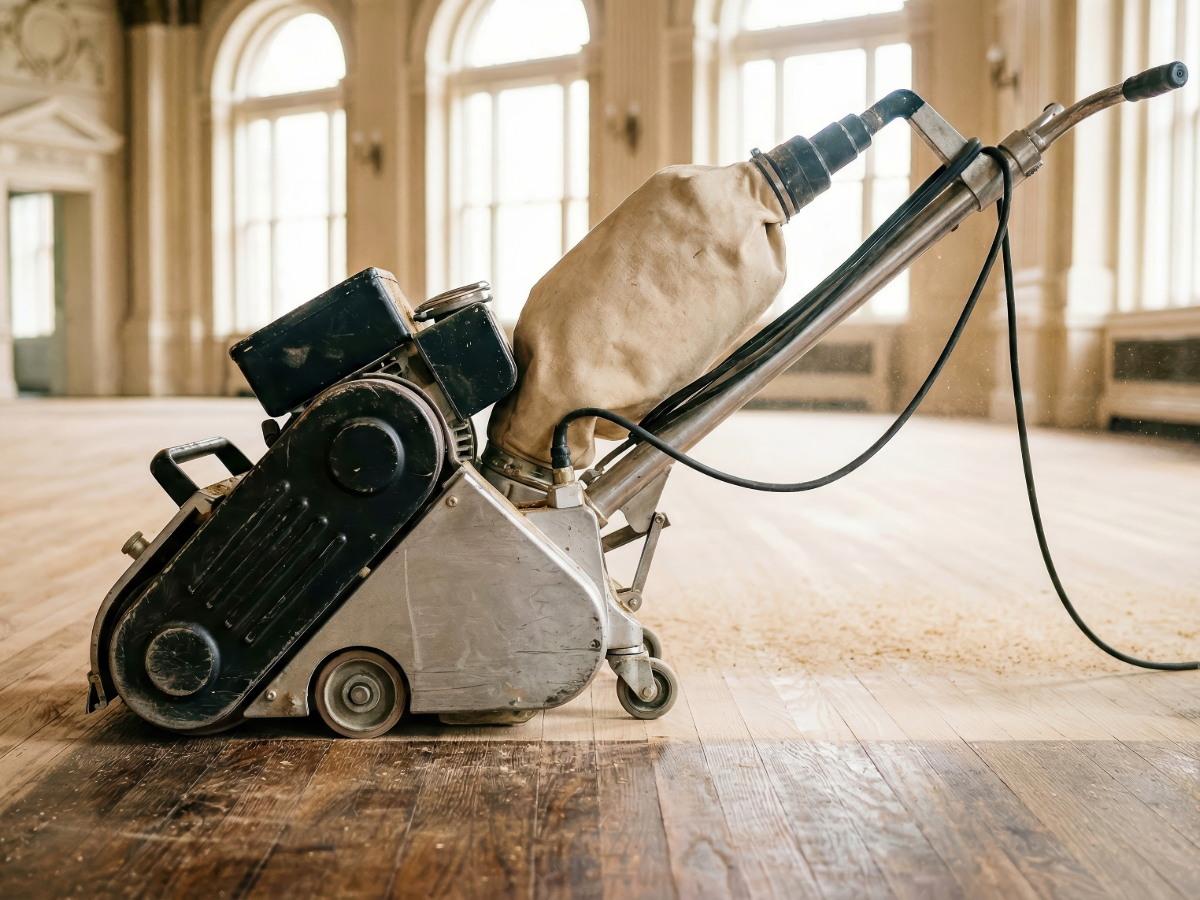
Refinishing is a full surface restoration. The existing finish is sanded away entirely, surface damage is smoothed out, and a completely fresh stain and protective top coat are applied. The boards stay in place. The result looks and feels like a brand-new floor — with the character and patina only time can give.
When It’s the Right Call
- Surface scratches have cut through the finish into the wood itself
- The finish is too worn or compromised for a recoat to bond effectively
- You want to change the stain color or switch finish types
- The floor has structural integrity but needs more than a surface refresh can deliver
What to Expect
Refinishing typically takes two to five days from sanding to final coat, plus a curing period before the space returns to full use. It’s more disruptive than recoating but far less involved than replacement. And with today’s finish technology, the result can genuinely leave your floor looking more current and more durable than it did originally.
Modern water-based finishes cure faster, emit far fewer VOCs, and deliver a cleaner, non-yellowing result compared to older oil-based systems. Matte and low-sheen finishes — currently the most popular choice — also have a practical advantage: they hide everyday dust and fine scratches far better than high-gloss alternatives.
Option Four: Replace
What It Is
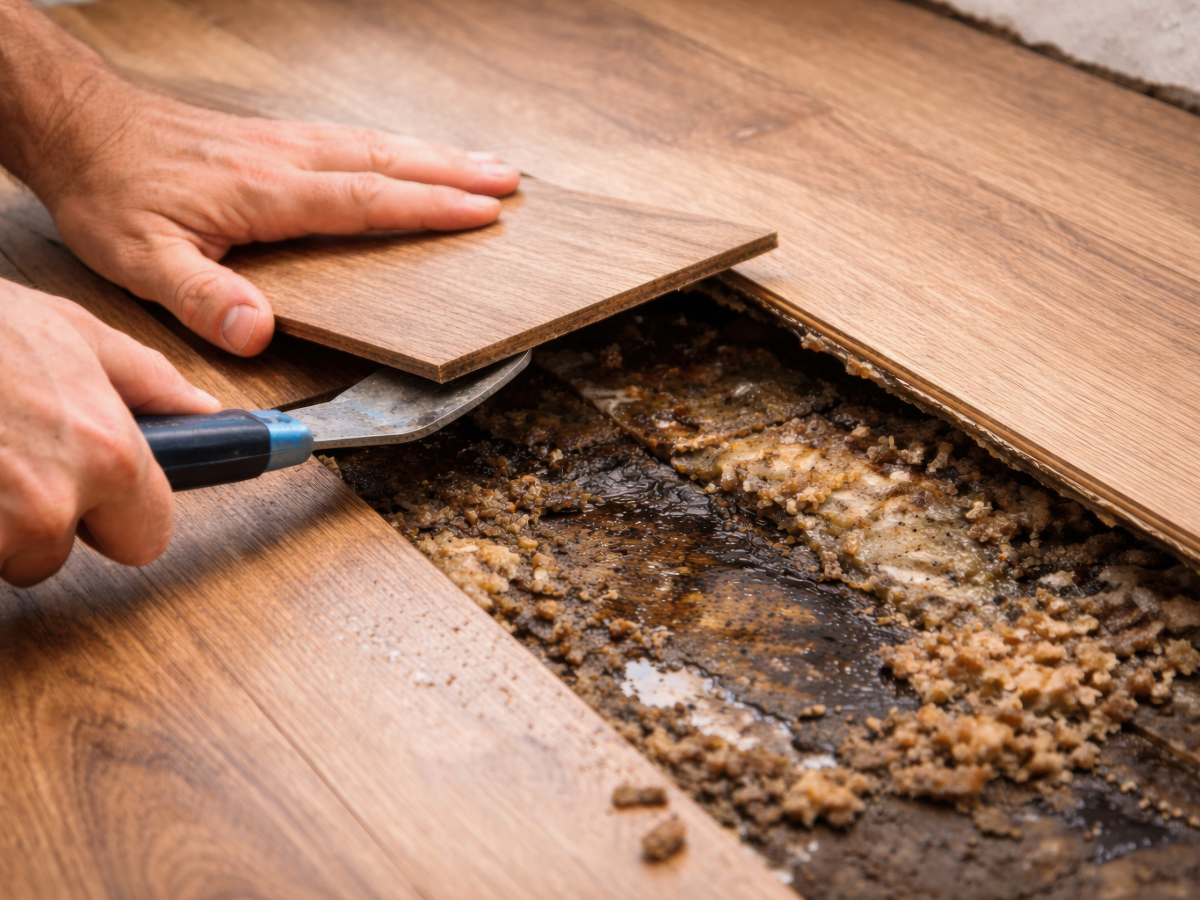
Replacement is a full removal and reinstall. The existing flooring comes out entirely, the subfloor is inspected and repaired as needed, and completely new hardwood goes in from scratch. It’s the most involved and most expensive option — but it also removes every constraint on what the floor can become.
When It’s the Right Call
Extensive water damage. Water is hardwood’s most serious adversary. When moisture penetrates and stays, the damage isn’t cosmetic — it’s structural. Cupping, warping, dark staining deep in the wood, and soft spots are all signs that no amount of sanding will fix the underlying problem. In these cases, the subfloor often needs attention too, which puts the project scope beyond what refinishing can address.
Significant board damage. Refinishing can smooth scratches and resurface worn finishes, but it can’t repair boards that are physically broken. Cracked or split boards, missing sections, and wear that has cut through the wood itself all point toward replacement. In some cases, targeted board replacement followed by a full refinish is viable — but when damage is widespread, a full replacement is usually the more reliable path.
The floor has reached its refinishing limit. Every floor has a finite refinishing lifespan. Once the wear layer is too thin — when you can see fasteners near the surface or the boards have lost noticeable thickness — refinishing is no longer safe or practical. This is especially important for engineered hardwood, where wear layer thickness determines everything.
You’re planning a design transformation. Sometimes the floor itself is fine, but it no longer fits where the home is going. If you’re opening up a floor plan, moving to wider planks, choosing a different species, or pursuing a completely different aesthetic, replacement is less about fixing a problem and more about realizing a vision. That’s a perfectly good reason to replace.
What to Expect
Replacement takes longer than any of the above options — typically one to two weeks, depending on scope, though prefinished products speed things up considerably since there’s no on-site curing required. The cost is higher upfront, but it opens up every possibility: species, grade, plank width, finish, layout. Everything is on the table.
Comparing Your Options at a Glance

| Reoil | Recoat | Refinish | Replace | |
|---|---|---|---|---|
| Disruption | Minimal | Low | Moderate | High |
| Timeline | Hours | 1–2 days | 3–5 days + cure | 1–2 weeks |
| Cost | $ | $$ | $$$ | $$$$ |
| Best for | Oiled floors needing a refresh | Worn finish, light surface scuffs | Deeper wear, stain or finish change | Structural damage, design transformation |
The Most Common Mistake Homeowners Make
It’s committing to a direction before getting a proper read on what the floor actually needs. It’s easy to underestimate damage that isn’t fully visible, or to assume replacement is necessary when a recoat would serve you well for years. It’s equally easy to apply a fresh coat of finish to a floor that really needs to come out — and end up paying for both.
A professional assessment before committing is the most valuable step in this entire process. Check the wear layer thickness. Look for movement or moisture. Assess the subfloor. Get an honest picture of all four options before spending a dollar.
How VANTIA Helps You Make the Right Call
At VANTIA Hardwoods & Interiors, we come at this as advisors first. We assess the wear layer thickness, check for structural movement or moisture issues, look at the subfloor condition, and give you an honest picture of what your options actually are. If a reoil or recoat is all you need, we’ll tell you. If it’s not, we’ll explain why and show you what a refinish or replacement could look like.
Whatever direction you choose, we’re here to make sure it delivers the best long-term value for your home.
Contact VANTIA → 📞 970.468.2684 | 730 N. Summit Blvd. #103, Frisco, CO
FAQ
How do I know if I should reoil, recoat, refinish, or replace my hardwood floors? Start with the least invasive option. If the floor has an oiled finish and looks dull, try a reoil. If the finish is worn but the wood is intact, a recoat may be all you need. Refinishing is the next step when wear reaches the wood itself. Replacement is warranted when there’s structural damage, the floor has hit its refinishing limit, or a full design change is the goal.
What is the difference between recoating and refinishing? Recoating adds a fresh protective layer over the existing finish without sanding to bare wood. Refinishing removes the existing finish entirely through sanding and starts fresh with a new stain and topcoat. Recoating is faster, less expensive, and less disruptive — but it only works when the existing finish still has structural integrity.
Can oiled hardwood floors be recoated? Oiled floors are typically refreshed through reoiling rather than recoating. Since penetrating oils work differently from surface finishes like lacquer or polyurethane, the maintenance approach is different. Reoiling is simple, effective, and can often be done without professional help.
What are the signs that hardwood floor replacement is needed? Buckling, deep water damage, cracked or missing boards, widespread structural issues, or a wear layer too thin to sand again are the clearest signs. Replacement is also the right call when a significant design change is the goal.
Can engineered hardwood floors be refinished? Many engineered hardwood floors can be refinished, but it depends on the wear layer thickness. Floors with a 3mm or 4mm wear layer typically have more refinishing potential than those with thinner layers. A professional assessment will tell you exactly where your floor stands.
Is wooden floor restoration worth it? Almost always, yes — provided the floor is assessed correctly first. Reoiling, recoating, and refinishing can all extend the life of your flooring, improve its appearance dramatically, and help you avoid the cost of replacement when the boards remain structurally sound. The key is matching the right solution to the actual condition of the floor.