

Part 4 of the Series: How to Evaluate Hardwood Flooring Like an Expert
When choosing hardwood flooring, most people focus first on the species, color, and finish. But plank width is another decision that can dramatically change how the finished floor looks throughout your home.
Plank width determines how many lines and seams you see across a floor, how prominently the natural grain and character of the wood appear, and how the scale of the flooring works with the architecture around it.
That’s why the team at VANTIA recommends thinking about plank width as more than a style or trend. We say this: think of the plank width as scale.
Species gives the wood its underlying character. Grade determines how much natural variation you see. Plank width determines the overall scale at which you experience both.
What Is Considered Wide Plank Hardwood Flooring?

Designers understand there isn’t one universally useful width for every home. Hardwood flooring is available in everything from traditional narrow strips to planks exceeding 10 inches in width.
As a general reference, traditional strip flooring is less than 3 inches wide, while plank flooring begins at 3 inches. In today’s premium hardwood market, widths of 5 inches and above are commonly described as wide plank flooring.
Don’t think of width as a label – think of what happens to the entire space when those planks are installed across an entire room.
VANTIA Hardwoods & Interiors offer all sizes in a 5-inch, 7-inch, 8-inch, or 10-inch plank, which creates a different visual scale. As boards get wider, there are fewer seams across the floor and more uninterrupted wood within each plank.
Quick Answer: How Do I Choose Hardwood Flooring Plank Width?
Choose plank width based on the scale and architecture of your rooms, the character you want to see in the wood, and the construction and quality of the flooring. Wider isn’t automatically better. The right width should feel proportional to the space while allowing the species, grain, and grade of the wood to be seen as intended.
VANTIA’s team of flooring professionals is here to help you choose the look and quality of hardwood floors that is perfect for your space.
How Does Plank Width Change the Look of a Room?
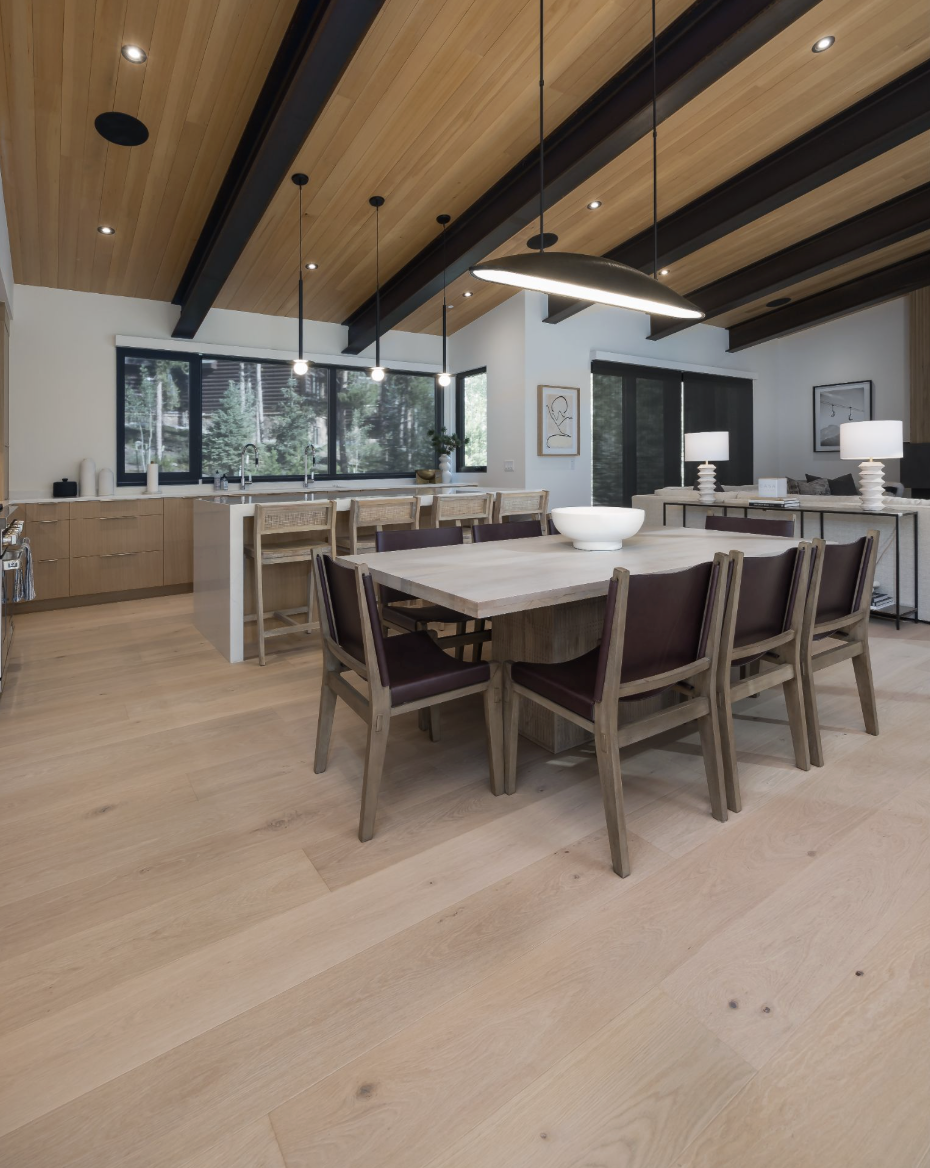
Plank width changes the visual rhythm of a hardwood floor.
With narrower planks, you see more individual boards and more seams. Those repeating lines create more movement across the floor. Depending on the species, grade, color, and finish, this can contribute to a more traditional appearance, or it can be used intentionally as a strong design element in a contemporary space.
As planks become wider, there are fewer seams and larger expanses of uninterrupted wood. The eye begins to notice the individual grain patterns and natural character of the boards rather than primarily the repetition of the flooring.
This can create a quieter, more expansive visual effect.
But don’t assume that wide plank means rustic.
A wide European oak plank in a clean grade with a subtle color and matte finish can look refined, minimal, and architectural. The same width in a character grade with prominent knots and natural variation can create a much more organic and expressive floor.
The width hasn’t changed. The way width interacts with the other characteristics of the wood has.
Does Wide Plank Flooring Make a Room Look Bigger?
Wide plank flooring can make a room feel more open because fewer seams create a larger, more continuous visual field. However, there isn’t a simple rule that says wider planks always make a room look bigger.
Proportion matters.
A wider plank may work beautifully across an expansive great room where long sight lines allow you to appreciate the scale of the boards. In another room, an extremely wide plank could become visually dominant rather than making the space feel larger.
This is why we recommend evaluating plank width within the actual architecture of the home rather than choosing it from a small flooring sample.
Consider the dimensions of the rooms, ceiling heights, open sight lines, transitions between spaces, and how much of the flooring will be visible at one time.
The goal with a wide plank isn’t to make every room look bigger. It’s to make the scale of the flooring feel right for the space.
Does a Wider Plank Show More of the Wood Grain?
Yes, and this is one of the most important reasons to consider width when choosing a quality hardwood floor. A wider plank provides a larger canvas for the tree.
As the width increases, you have an opportunity to see more of the wood’s natural grain, color variation, knots, mineral characteristics, and other features within an individual board.
This is where species, grade, and width begin to work together.
Consider VANTIA’s European White Oak as an example.
A wide plank made from a relatively clean grade can create a calm, expansive appearance with subtle natural variation. Use that same wide plank format with a character grade, and knots, grain movement, and color variation become a more prominent part of the overall design.
Neither approach is inherently better. They simply produce very different floors for a different aesthetic.
This is why choosing hardwood flooring one characteristic at a time can be misleading. Width changes how prominently you experience the species and grade you’ve already selected.
Should Large Rooms Have Wider Hardwood Planks?

Large rooms and open floor plans can accommodate wider hardwood planks particularly well because the scale of the flooring can complement the scale of the architecture.
But room size alone shouldn’t determine plank width.
Also consider:
- Ceiling height and overall room proportions
- Open versus segmented floor plans
- Long sight lines through adjoining rooms
- Architectural style
- The amount of natural variation in the flooring
- The desired visual prominence of the floor
A large contemporary home with expansive glass, high ceilings, and open living spaces may support a very different plank scale than a home with smaller rooms and more traditional architectural proportions.
Instead of asking, “What width should I use in a room this size?” ask a better question:
“What scale of flooring works with the architecture of this home?”
Is Wider Hardwood Flooring More Difficult to Install?
Width can affect installation requirements, but plank width is only part of the equation.
The construction of the flooring matters enormously.
Solid hardwood naturally expands and contracts as environmental conditions change. As solid boards become wider, dimensional movement across each plank becomes an increasingly important consideration.
High-quality engineered hardwood is designed differently. A real hardwood wear layer is combined with a stable engineered core constructed to reduce dimensional movement. This makes engineered construction particularly important when evaluating wider hardwood planks.
But not all engineered hardwood is constructed to the same standard.
When comparing wide plank flooring, look beyond the surface appearance and consider the stability of the core, thickness and quality of the hardwood wear layer, precision of the milling, installation method, and manufacturer’s specifications.
Climate, humidity, subfloor conditions, radiant heating, and the installation environment may also influence the appropriate product and installation method.
Does Plank Length Matter When Choosing Hardwood Flooring Width?
Absolutely.
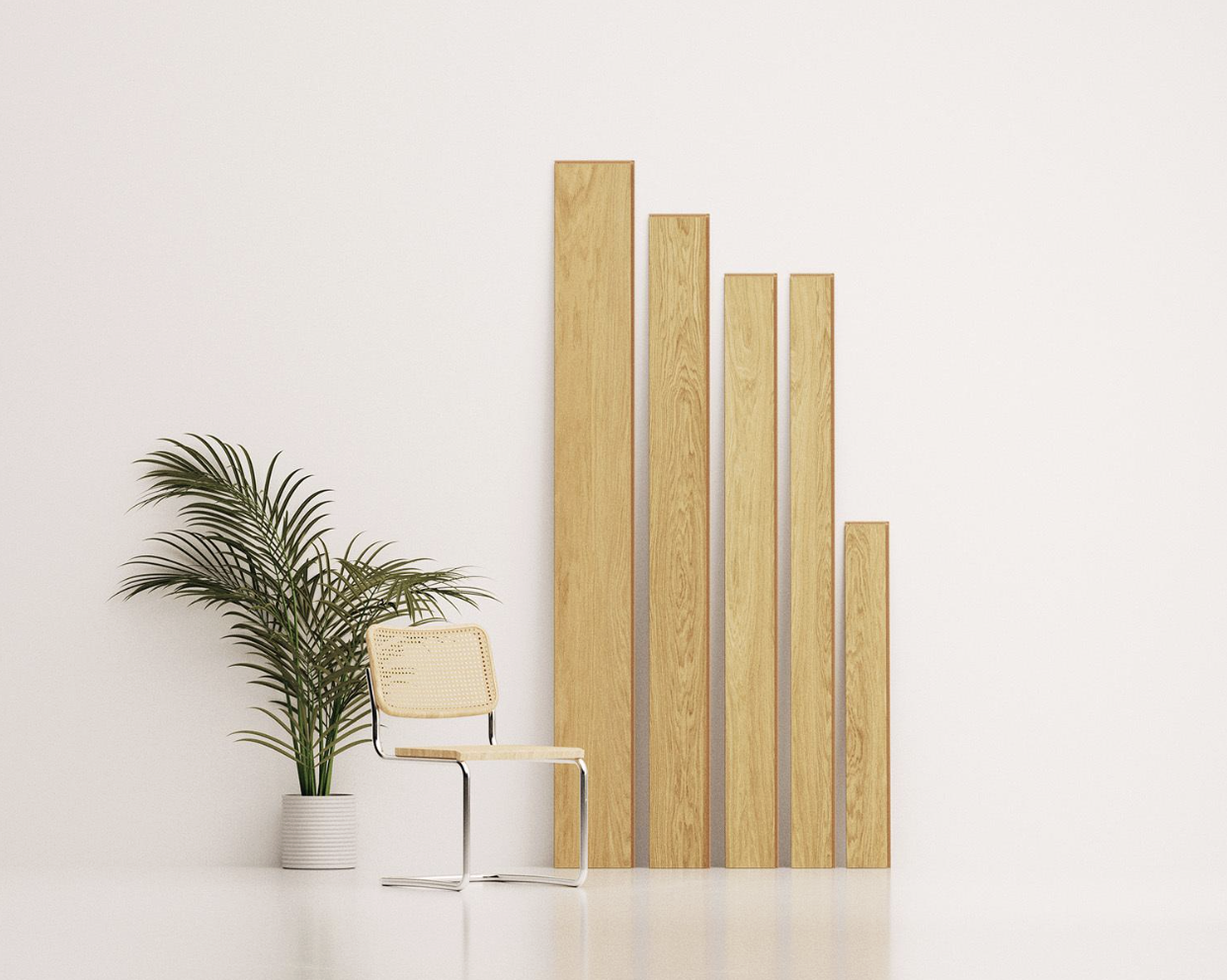
Width gets much of the attention, but plank length can be just as important to the finished appearance of a wide plank floor.
Imagine a beautiful 8-inch-wide floor composed primarily of short boards. The frequent end joints can interrupt the expansive visual effect you were hoping to achieve by choosing a wider plank.
Longer boards reduce the number of end joints and allow the eye to follow the grain farther across the room. Combined with wider planks, they can create a calmer and more continuous floor.
This is why two hardwood floors advertised as the same width can look very different when installed.
When evaluating premium wide plank hardwood flooring, ask:
- What is the average plank length?
- What is the maximum length?
- Are the boards fixed length or random length?
- How many shorter boards should I expect?
- How will the combination of width and length look across the entire installation?
For example, some VANTIA engineered European White Oak collections combine approximately 7- to 8-inch widths with boards extending 7 feet or longer. The combination of width and length is what creates the overall sense of scale, not the width measurement alone.
Is Wider Plank Hardwood Flooring Better Quality?
Not necessarily.
Width is a design characteristic, not by itself a measure of hardwood flooring quality.
An extremely wide plank can still be made with an inferior core, thin wear layer, inconsistent milling, or poor-quality finish.
Likewise, a narrower plank manufactured from excellent materials with precise milling and high-quality construction can be an exceptional floor.
This is one reason we recommend evaluating the construction of an engineered hardwood floor before evaluating its appearance.
Once you know you’re considering a well-made product, width becomes one of the important design decisions that determines how that quality flooring will look and perform in your home.
How Do Plank Width, Species, Grade, Texture, Color and Finish Work Together?
One of the biggest mistakes when choosing hardwood flooring is evaluating each characteristic independently.
They work together.
Consider how changing just a few characteristics can completely alter the appearance of a wide plank floor:
Wide plank + clean grade + smooth texture + pale matte finish
The result can feel quiet, expansive and architectural.
Wide plank + character grade + textured surface + natural color
The same scale can feel organic, expressive and rich in natural wood character.
Narrower plank + consistent grade + deeper color
More seams and repetition create greater visual rhythm across the floor.
This is why we evaluate hardwood flooring through a series of interconnected layers: species, grade, plank width, texture, color, and finish.
The best floor isn’t created by choosing the “best” option in each category. It’s created when all of those choices work together to produce the result you want.
FAQs About Hardwood Flooring Plank Width
What is considered wide plank hardwood flooring?
Hardwood flooring 5 inches or wider is commonly described as wide plank, although flooring is available in considerably larger widths. Rather than focusing exclusively on the definition, consider how the width affects the scale, seams, grain visibility, and overall appearance of the finished floor.
What is the best width for hardwood flooring?
There is no single best plank width. The right choice depends on the architecture and proportions of the home, the species and grade of the wood, and the desired appearance. Wider planks generally create fewer seams and showcase more individual wood grain, while narrower planks create more lines and visual rhythm.
Does wide plank flooring make a room look bigger?
It can. Fewer seams can make the floor appear more continuous and create a sense of openness. However, the relationship between plank width and room size is more about proportion than a formula. An extremely wide plank can also become a dominant design element in a smaller space.
Is wide plank engineered hardwood better than solid hardwood?
Neither construction is inherently better for every application. However, engineered hardwood expands and contracts less than solid wood, making quality engineered construction particularly useful for wide plank flooring and installations where environmental conditions need to be considered.
Choose Plank Width as Part of the Architecture
Plank width may seem like a simple measurement on a flooring specification sheet. Once installed across hundreds or thousands of square feet, it becomes part of the visual scale of the architecture.
So don’t automatically choose the widest board available—or choose a width simply because it’s currently popular.
Look at the room. Look at the architecture. Look at the length of the boards and the construction underneath them. Then consider how the width will showcase the species, grade and natural character of the wood.
The right plank width is the one that allows the floor and the architecture to work together.
VANTIA Hardwoods has more than 25 years of experience helping homeowners, designers, architects, and builders evaluate quality hardwood flooring. Explore our hardwood flooring collections, request samples, or talk with our team about the right flooring for your project.