
Part 6 of the Series: How to Evaluate Hardwood Flooring Like an Expert
The best hardwood flooring finish balances the look you want with the maintenance you are comfortable doing. Start with the finish system that protects the wood, then consider sheen as a personal choice, the color of the finish, plus how you plan to maintain or refresh the floor over time.
The finish matters because it affects more than appearance. It helps protect the wood from everyday surface wear and influences how the grain, color, and texture look and feel underfoot.
You have plenty of options, but you don’t need to become a flooring expert to make a good choice. Focus on how you want your floor to look, how your household will use it, and what kind of maintenance you’re willing to do over the years.
What Does a Hardwood Flooring Finish Actually Do?
A hardwood flooring finish protects the surface of the wood while helping create the floor’s final appearance.
When comparing floors, it helps to separate three things that homeowners sometimes group together: its finish, its sheen, and its color.
The finish system provides the protective treatment. Sheen describes how much light the surface reflects (such as matte, satin, or gloss). Stains and other color treatments influence the color and tone of the wood.
These choices work together, but they aren’t the same thing.
For example, two hardwood floors can have similar colors and the same matte appearance but use completely different finish systems. Those systems may require different cleaning products, maintenance routines, and methods for refreshing the floor later.
That makes the finish system itself an important part of your hardwood flooring decision.
What Is the Difference Between Oil and Polyurethane Hardwood Finishes?
Oil and polyurethane represent two broad approaches to hardwood flooring finishes, but products within each category vary.
Oil and Hardwax-Oil Finishes
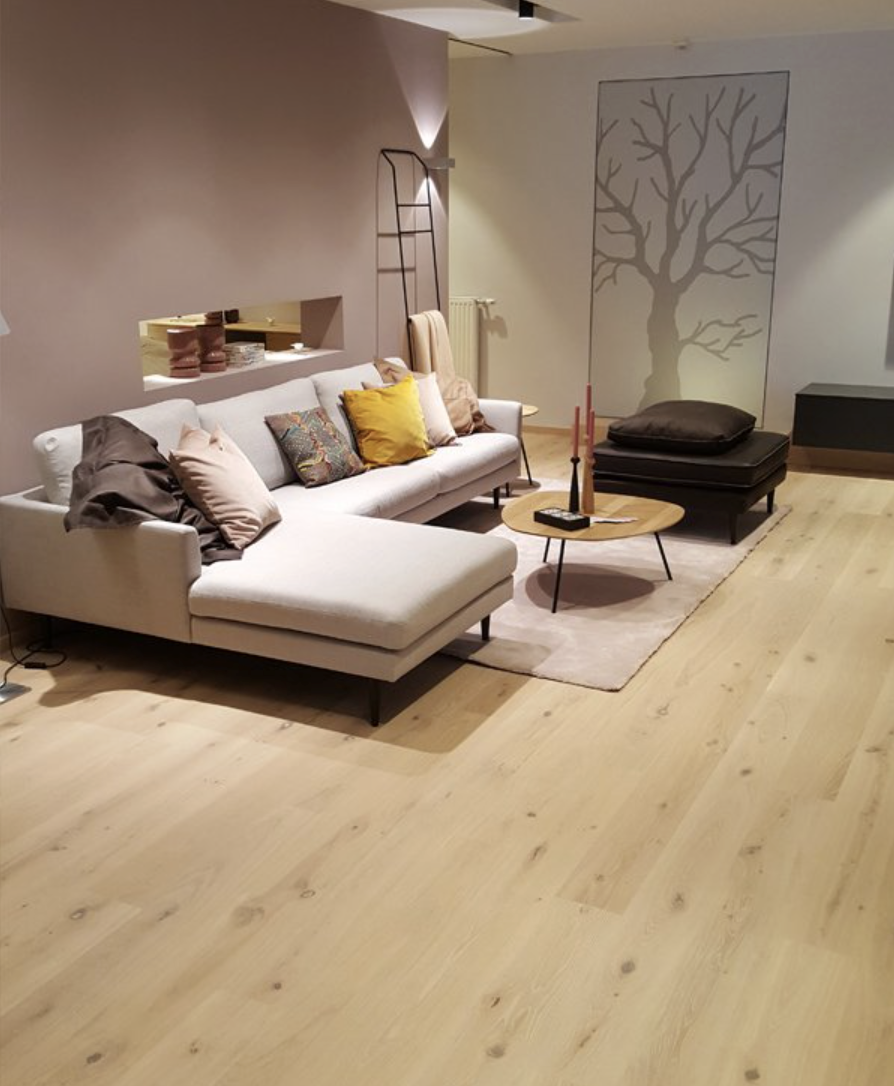
Penetrating oils and hardwax-oil systems soak into or bond closely with the wood rather than creating the same type of surface film associated with polyurethane finishes.
Many homeowners and designers choose these finishes because they like the natural look and feel they can create. Oil finishes often emphasize the grain and character of the wood without making the protective coating a prominent part of the floor’s appearance.
Maintenance matters, though. Different oil and hardwax-oil products require specific cleaning and maintenance routines. Some allow maintenance treatments or localized repairs that can refresh worn areas without treating the entire floor.
Always follow the manufacturer’s instructions for the specific product rather than assuming all oil-finished floors require the same care.
Polyurethane and Other Film-Forming Finishes

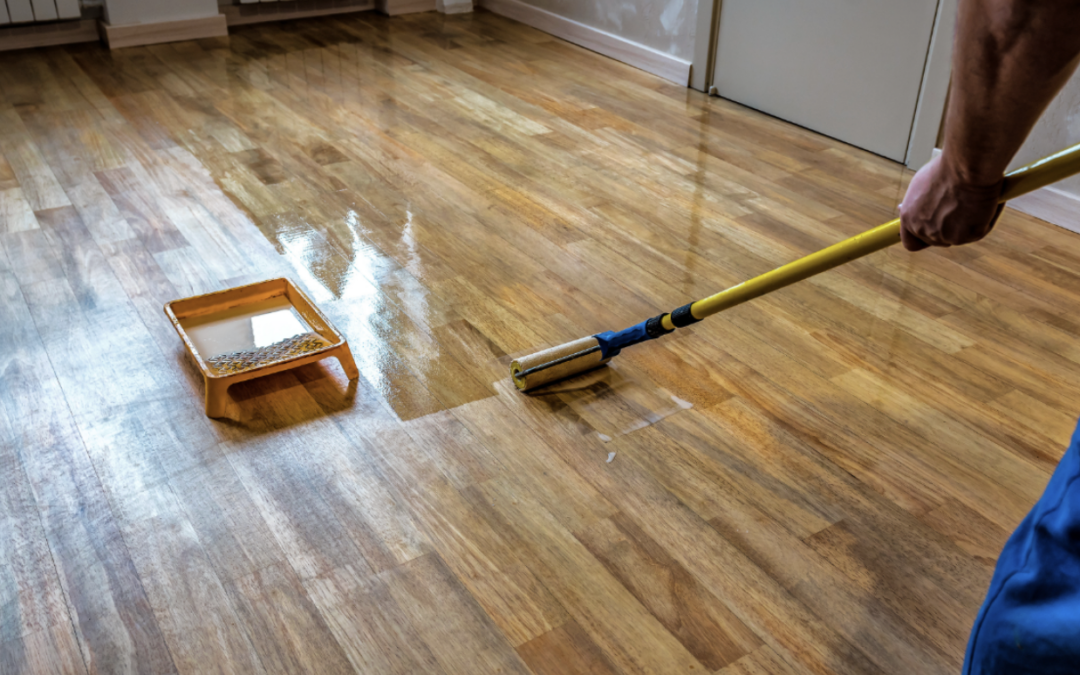
Polyurethane and other film-forming finishes create a protective layer over the surface of the wood.
Manufacturers offer both water-based and other polyurethane systems with a wide range of performance characteristics and appearances. Factory-applied, UV-cured finishes add another category, with manufacturers designing specific systems for their flooring products.
Instead of asking whether oil or polyurethane is universally “better,” compare the actual products you’re considering.
Look at the finished surface. Ask about routine cleaning, long-term maintenance, and repair options. Most importantly, understand what you’ll need to do when the floor eventually shows wear.
Should You Choose a Matte, Satin, or Gloss Hardwood Floor?
Matte, satin, and gloss describe how much light reflects from the floor’s surface.
Matte finishes reflect the least light and create a quieter, more natural-looking surface.
Satin finishes add some reflection without creating the stronger shine associated with gloss. They offer a middle ground for homeowners who want a little more light from the floor.
Gloss finishes reflect more light and make the surface itself more prominent.
Manufacturers don’t always define these categories in exactly the same way, so one company’s matte may look slightly different from another company’s matte.
Sheen also affects what you notice on the floor. Lower-sheen surfaces often make dust, small scratches, and everyday surface marks less obvious. Higher-sheen floors reflect more light, which can call attention to both the beauty of the floor and imperfections on its surface.
Don’t confuse sheen with durability, however. A glossy floor isn’t necessarily tougher than a matte floor, and a matte finish isn’t automatically less durable.
Compare the actual finish systems and look at samples in your home’s natural and artificial light before deciding.
How Does Finish Change the Color and Character of Wood?
Finish can dramatically influence how you see the natural character of hardwood.
Some finishes deepen the wood’s natural tones and emphasize its grain. Others support a lighter, more understated appearance. The same finish can also produce very different results on different wood species.
That’s why choosing a hardwood floor by a color name alone can lead you in the wrong direction.
The species, natural color variation, grade, and texture all influence the final appearance. A finish that looks warm and rich on one species may look quite different on another. Wire-brushed wood can also interact with a finish differently than a smooth surface.
When choosing your floor, look at the complete finished sample, not simply the stain or color name.
Our guides to choosing a hardwood flooring species, color, and texture can help you understand how those individual decisions come together.
Which Hardwood Flooring Finish Works Best for Kids, Pets and Busy Homes?
Instead of looking for a finish labeled “best for pets” or “most durable,” look closely at how a specific flooring product performs and how you will care for it.
A good finish helps protect the surface from everyday wear, but no finish makes hardwood indestructible. A finish can’t prevent a heavy object from denting the wood underneath it, and it doesn’t turn hardwood flooring into a waterproof surface.
Your daily habits matter, too.
Think about where people and pets enter the house. Entry rugs can help capture grit before it reaches the floor. Clean spills promptly according to the manufacturer’s instructions. Use appropriate protection under furniture, and follow the recommended cleaning routine instead of experimenting with products that could damage the finish.
If you have children, dogs, or an especially active household, ask how the specific flooring you’re considering handles routine wear and what options you’ll have when the floor eventually needs attention.
The right choice combines the performance of the product with realistic expectations about how you live.
How Much Maintenance Will Your Hardwood Flooring Finish Need?

Every hardwood floor requires routine care. The bigger difference comes in how you maintain and renew the finish over the long term.
Start by asking about three stages:
Routine cleaning: What products and methods does the manufacturer recommend for regular cleaning?
Periodic maintenance: Does the floor require a maintenance treatment or other occasional care beyond cleaning?
Long-term renewal: What can you do when the finish eventually shows significant wear?
Some oil-finished floors allow localized maintenance or repairs. Depending on the product and the damage, you may be able to address a specific area rather than treating the entire floor.
Film-forming finishes may allow recoating before the floor reaches the point where it requires full sanding and refinishing. The condition of the existing floor and compatibility of the products will determine what’s possible.
If you’re considering engineered hardwood flooring, also ask about the wear layer. The thickness and construction of that layer, along with the manufacturer’s recommendations, will affect your future sanding and refinishing options.
Don’t wait until your floor needs work to find out how you can maintain it. Ask for written care instructions and realistic renewal options before you order the flooring.
How Can You Choose the Right Hardwood Flooring Finish?
You can simplify the decision by asking four questions:
- Do I like how the finished flooring actually looks?
- Does this finish fit the way we use our home?
- Can I realistically follow its recommended care routine?
- How can we refresh or renew the floor as it ages?
Those questions move the conversation beyond choosing between matte and satin or oil and polyurethane. They also help you think about your hardwood floor as a long-term part of your home.
Bring your other flooring choices into the decision as well. Your species, grade, color, plank width, texture, and finish all contribute to the final result. A finish should complement those choices rather than compete with them.
Whenever possible, compare large finished samples in the room where you plan to install the flooring. Look at them in morning and evening light. Place them next to cabinetry, stone, tile, and other permanent materials.
To best understand how to choose hardwood flooring that’s right for your home, visit our blog series:
How to Choose Hardwood Flooring Like an Expert
- Species: What natural grain and character do I want?
- Grade: How much variation do I want to see?
- Width: What scale works with my rooms and architecture?
- Texture: How refined or dimensional should the surface feel?
- Color: What tone do I want the wood to carry, given the species, grade, width, and texture I’ve chosen?
- Finish: What sheen and performance characteristics complete the floor?
At VANTIA Hardwoods & Interiors, we help homeowners, designers, architects, and builders compare those details as part of the complete flooring selection — not as isolated decisions.
Explore VANTIA’s hardwood flooring collections, or contact our team to compare finished samples and request a quote for a Colorado or nationwide custom hardwood flooring project.
Frequently Asked Questions About Hardwood Flooring Finishes
Is a matte hardwood floor finish less durable than satin?
Not necessarily. Matte and satin describe how much light the surface reflects, not how durable the finish is. Compare the performance specifications of the actual finish systems rather than using sheen as a measure of durability.
Can you change a hardwood floor’s finish later?
Often, yes, but your options depend on the flooring and its existing finish. Some floors can accept a new maintenance treatment or recoat, while others may require sanding and refinishing. Engineered hardwood also has a wear layer that can affect sanding options. Check the flooring manufacturer’s recommendations before making changes.
Can scratches in an oil-finished floor be repaired?
Some oil and hardwax-oil systems allow localized maintenance or repair, which can make them appealing to homeowners who want the option to address specific worn areas. The repair method and final result depend on the finish system, the type of damage and the manufacturer’s instructions.